
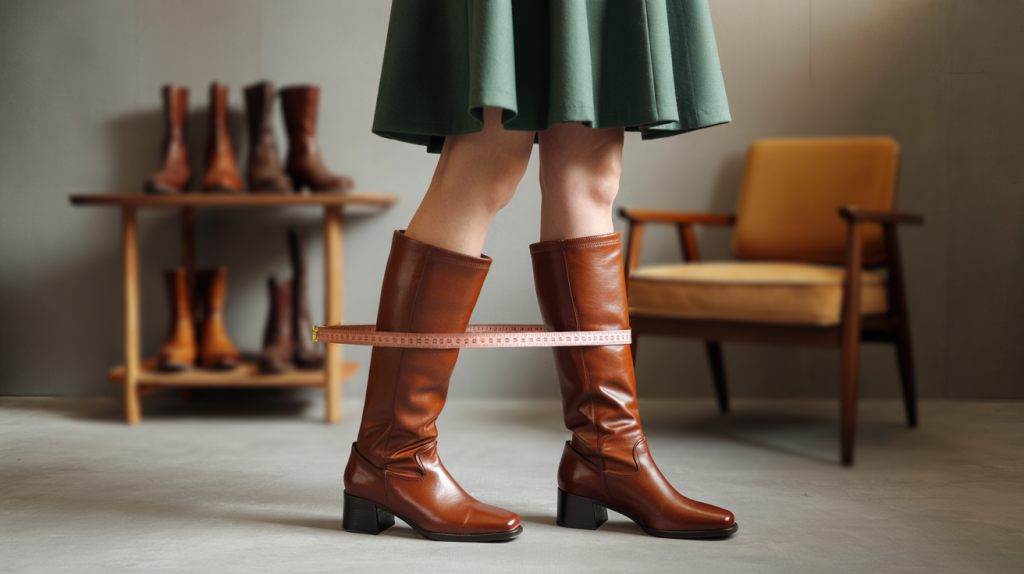
Love the charm of vintage boots but worry they shrink your silhouette instead of stretching it. Good news, the right shaft height, heel, and toe shape can visually add inches and keep proportions clean. This guide gets straight to what works for petite frames, then shows exactly how to shop and style with zero guesswork.
There is context. In fashion, “petite” means 5’4″ and under, a standard used by major retailers like Nordstrom. The average height of U.S. women sits at 63.5 inches based on 2015 to 2018 measurements, so many shoppers land in this camp already (CDC NCHS, Series 3 No. 46, 2021). That reality changes how boots should fit, where the shaft hits the leg, and which lines elongate rather than cut off.
Petite vintage boots that flatter : start with proportions
The idea is simple. Preserve a clean leg line and keep the body in the rule of thirds. On a petite frame, tall boots that end just below the knee often sit too high and bisect the leg at the wrong spot. A mid-calf or refined ankle boot usually lands better, especially with a cropped or above-the-ankle hem.
Heel shape matters. A block heel between 1.5 and 2.75 inches gives lift without throwing balance. A slight platform can help, yet an exaggerated platform risks a heavy look with vintage silhouettes. Pointed or almond toes extend the foot visually. Round toes read shorter, useful only when the shaft is lower and the hem shows more ankle.
Fit rules that actually work under 5’4″
Start at the calf. Measure the fullest part and compare with the boot shaft circumference. Aim for a 1 to 2 cm allowance so jeans can slide in, but not so much that the shaft gapes. For tall pairs, a shaft height of 12 to 14 inches often fits better on petites than standard 15 to 16 inch styles. Ankle boots should end right at or slightly under the ankle bone for the longest line.
Hem placement does the heavy lifting. Tuck slim jeans into sleek shafts, or pair ankle boots with cropped trousers that show a sliver of skin. Skirts work best just above the knee with mid-calf boots. If the vamp is high, match tights to the boot color to keep the line uninterrupted.
One more layer of confidence comes from clear checkpoints. Save this quick checklist for try-ons in store or online returns.
- Shaft hit test : ends below the widest part of the calf and below the knee crease
- Heel comfort : walk 10 steps, ankles stay stable, weight feels centered
- Toe shape check : almond or pointed to visually lengthen, especially with midi hems
- Color strategy : match boots to tights or trousers for a long vertical line
- Leather quality : even grain, firm heel counter, insole intact for support
Mistakes that shorten the leg line, and easy fixes
Oversized shafts appear first on the list. A beautiful 70s riding boot that spins around the calf looks bulky and shortens the leg. A cobbler can add an elastic panel or insert a slim insole, but major shaft reductions cost time and money. Better to filter listings by calf width from the start.
Another trap is high-contrast breaks. Light jeans with dark ankle boots create a hard cut at the ankle. Swap for darker denim or add tone-matched socks that disappear between hem and boot. It takes seconds, the line looks longer instantly.
Heel height also misleads. A narrow stiletto on vintage pairs often sinks into pavement and tilts the pelvis forward. A mid block heel supports daily wear. It is not flashy, it just works. And sizing down for a snug fit can backfire with stiff vintage leather. Feet swell through the day, so try on in the afternoon, not morning, to avoid shoes that feel tight by 5 pm. Yes, that timing detail has saved many returns, it has definately helped.
Where to find petite-friendly vintage boots, and how to verify
There has been a steady shift toward secondhand. The 2024 ThredUp Resale Report projects the global secondhand market to reach 350 billion dollars by 2028, which expands the pool of vintage boots available online. More supply means better chances to target exact shaft heights and calf widths with filters and advanced search terms.
Listings vary, so ask for measurements in centimeters and inches. Request shaft height from the insole to the top edge, shaft circumference at the widest point, heel height measured at the back, and outsole length. Photos against a measuring tape reduce surprises. For brands known to run narrow or small, compare size charts across years, since vintage lasts often differ from modern ones.
Authenticity rests on four clues. Logos and stamps match period-correct fonts, stitching is even and tight, leather smells clean not chemical, and soles show natural wear patterns rather than uniform sanding. When in doubt, ask for a close-up of the insole logo and the inner size code. For Italian and French labels, look for country of origin stamps that match the brand’s manufacturing history in that decade.
A final practical note. Petite-focused searches unlock better results. Try terms like “12 inch shaft”, “narrow calf”, “kitten heel ankle boot”, “pointed toe vintage 90s”, or “mid calf 30 cm”. Combine with color and material to narrow even more. The process turns strategic, and the payoff is a pair that lengthens the line without any styling acrobatics.