
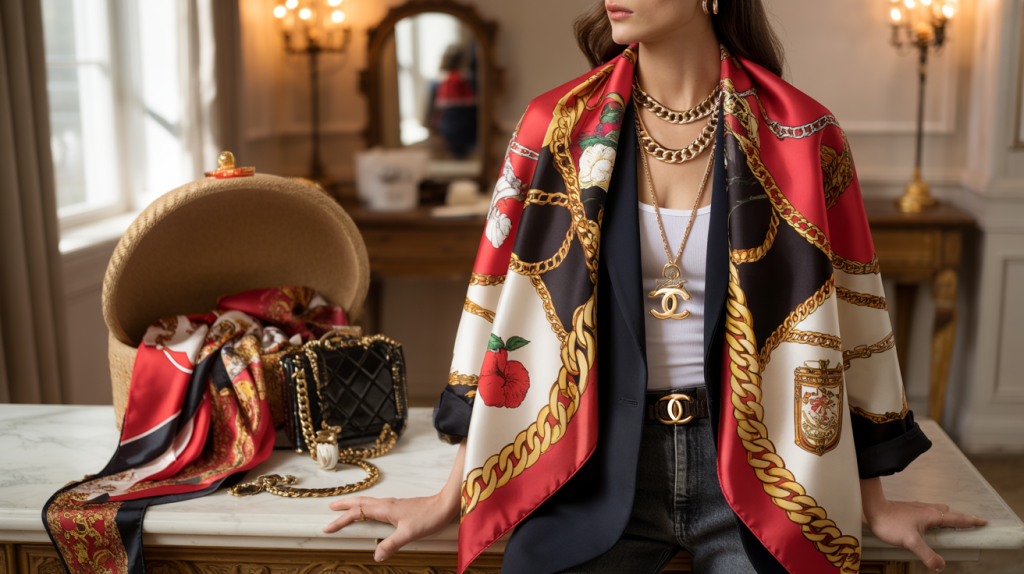
Baroque chains, glossy ropes, camellias in bloom. The eye knows them instantly. Vintage Chanel prints, once tucked away in archives and grandmothers’ wardrobes, are back in full view on streets, red carpets and resale feeds. The look feels luxe, a little irreverent, and very right now.
This revival does not happen in a vacuum. Chanel reported revenue of 19.7 billion dollars in 2023, up 16 percent year on year, according to the brand’s May 2024 financials. At the same time, the wider luxury engine kept humming. Bain and Company valued the personal luxury goods market at 362 billion euros in 2023. Those twin forces set the stage for a renewed appetite for heritage codes, including the printed silks, twill scarves and chain motifs that defined late eighties and nineties Chanel.
Vintage Chanel prints are back : what changed and why it sticks
The main idea is simple. Fashion rotates, but icons keep their pull. After years of quiet-luxury minimalism, bold archive graphics read fresh again. A silk carré with a chain link grid turns a plain tee into a look. A printed camellia scarf nods to the house without shouting logos.
Shoppers also want rarity. The millenial and Gen Z mix thrift with trophy pieces, building outfits around one talking-point accessory. Resale platforms make that hunt fast and global, so a 1991 scarf found in Paris can land in Austin or Seoul a week later.
There is also a practical angle. Investing in archive Chanel often costs less than buying a new seasonal piece, yet the vibe is unmistakable. That price-to-impact ratio keeps demand steady even when trends shift.
From Karl Lagerfeld to today : chains, camellias, ropes and crests
Karl Lagerfeld took the helm at Chanel in 1983 and electrified the house codes. Prints from that era often feature oversized curb chains, nautical ropes, equestrian bits and heraldic crests set on glossy silk. They feel opulent, graphic and wearable with denim or tailoring.
The camellia, long associated with Gabrielle Chanel, appears as allover blooms or as a single centerpiece on scarves and twill squares. Jewelry print scarves that mimic layered gold chains became a signature of the late eighties and early nineties. Those patterns, with saturated reds, inky blacks and imperial golds, are the designs resurfacing most on style feeds right now.
Recent collections have referenced the archive with lighter touches, keeping the conversation alive and nudging new shoppers to look back to originals. That feedback loop fuels the current wave.
Prices and demand : what the data says about the retour imprimé vintage Chanel
Resale interest has momentum. thredUP’s 2024 Resale Report projects the global secondhand apparel market to reach 350 billion dollars by 2028, signaling a long runway for pre-loved luxury. Within primary luxury, Bain and Company’s 2023 estimate of 362 billion euros underlines the resilience of the sector that anchors Chanel’s desirability.
Chanel’s own scale matters for prints too. With 19.7 billion dollars in 2023 revenue and double digit growth, the brand’s cultural presence remains high, which typically supports secondary market attention for heritage pieces from the logo wave era.
Auctions and specialty resellers reflect that appetite, with curated drops of 1980s and 1990s silk scarves and costume jewelery selling through quickly. While pricing varies by condition and rarity, clean baroque chain prints and camellia motifs in strong colors tend to command a premium compared to softer or abstract themes.
How to wear and authenticate vintage Chanel prints today
Styling lands best when simple. Pair a chain print scarf with a white tank and dark denim, or knot a camellia twill at the neck over a navy blazer. Let one archival pattern carry the outfit. For evening, wrap a large silk square at the waist as a belt and add discreet earrings. That contrast keeps the look modern.
Authenticity deserves real attention. Vintage Chanel has identifiable markers across eras, and small checks go a long way before clicking buy.
- Labels and fonts : late 1980s and 1990s scarves often read Chanel with specific kerning and a registered mark in the corner print.
- Hand-rolled hems : true vintage silks typically have plump, hand-rolled edges stitched toward the face of the scarf.
- Print quality : colors should sit crisp with clean registration and no bleeding where motifs meet.
- Hallmarks on jewelry : costume pieces from the era carry oval or round stamps with season codes on the reverse.
- Provenance and condition notes : request close-ups of corners and edges, plus any care tags or original boxes.
If a piece looks too new for its supposed age or the palette feels off against known archive colors, pause. Compare with verified examples from trusted dealers or auction catalogs. A small amount of diligence preserves the joy of the find.
The last piece of the puzzle is care. Store silk flat or loosely rolled, avoid direct sun, and send to a specialist cleaner if needed. Treat these prints as living design history and they will keep rewarding every wear.