
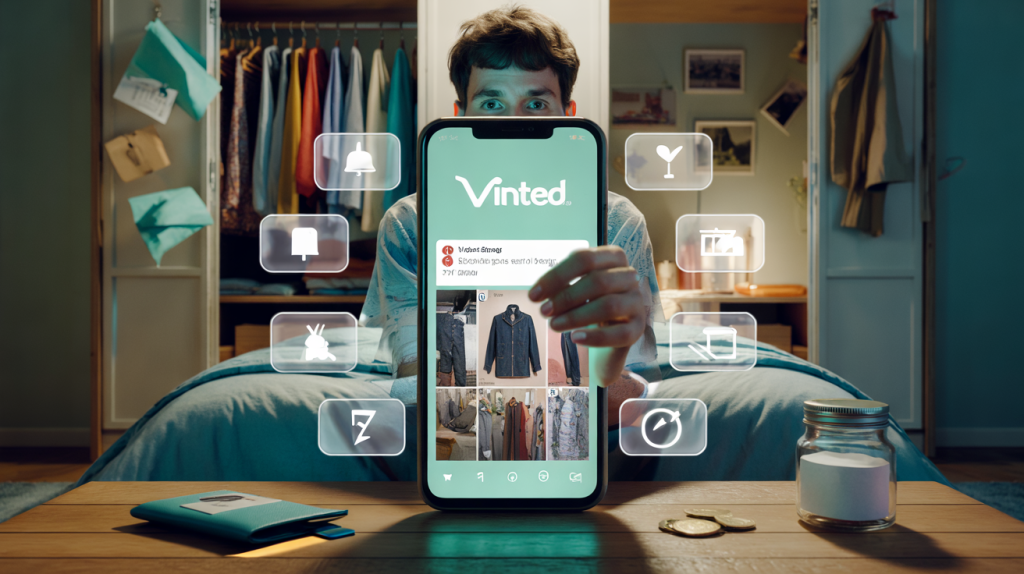
That one click on a perfect jacket at a tiny price feels thrilling. On Vinted, the mix of scarcity, notifications, and social proof turns casual browsing into a sprint, and impulse buys happen before the brain catches up.
The scale is massive. Vinted says it counts more than 80 million registered members across Europe and beyond, a number promoted on its corporate pages in 2024. At the same time, research has long flagged compulsive buying as a real public health issue. A meta analysis published in 2016 in the Journal of Behavioral Addictions estimated global prevalence at about 4.9 percent, a rate that rises in younger and more online populations. The question is simple : how do second hand bargains become a trigger, and how can buyers take back the wheel without losing the joy of circular fashion.
Vinted’s bargain design and why the brain says yes now
Small prices, one of a kind items, and a ticking sense that someone else will grab it first. That is the recipe. Each listing is unique, which creates scarcity, and the sold counter or favorites count works like social proof. The feed refreshes fast, so novelty rewards every swipe.
Psychologists describe a loop that repeats. Spot a rare find, feel a jolt of anticipation, test the wallet with a low stake amount, then recieve a quick payoff when the order confirms. The loop encourages the next search. None of this equals wrongdoing by a platform, yet the environment can nudge quick decisions, especially during stress or late night scrolling.
The circularity promise adds another layer. Buying second hand feels responsible, so the internal brake softens. The mind frames the spend as a smart save rather than a cost, even when the wardrobe is already full.
What recent data says about compulsive shopping and resale growth
The numbers put context around the feeling. The meta analysis led by Zsolt Demetrovics and colleagues in 2016 reported a pooled prevalence near 4.9 percent for compulsive buying in the general population, with higher rates in samples of students and online shoppers. Source : Journal of Behavioral Addictions, 2016.
Resale keeps expanding at speed. The 2024 ThredUp Resale Report projected the United States second hand market to reach 73 billion dollars by 2028, after growing to 45 billion dollars in 2023. Source : ThredUp 2024 Resale Report, March 2024.
Vinted’s footprint adds reach to that trend. The company communicates more than 80 million members and operations in over a dozen European markets as of 2024. Source : Vinted company pages, 2024. More people, more listings, more moments where a good deal feels urgent.
Practical moves to slow down on Vinted without quitting second hand
The goal is not to ditch resale. It is to reduce the impulse window and keep the savings real. Small frictions help because they restore a pause between want and buy.
• Create a two step rule : add to favorites, wait 24 hours, then decide.
• Cap monthly deposits in the wallet, and turn off auto top up.
• Filter by size and material, then sort by lowest to highest to avoid thrill hunting.
• Hide categories that trigger impulse clicks and follow only a short list of brands.
• Switch off push notifications for likes and price drops, keep only order messages.
• Use a running list of actual needs, cross check before each purchase.
• Try the one in one out rule for closets to keep volume in check.
• Pay by card, avoid storing details to add a pause at checkout.
A concrete example shows the shift. A buyer sets a hard 30 euro wallet cap for the month, disables price drop alerts, and uses favorites as a cooling shelf. By the end of the week, only one item still feels right. The spend fits the budget and the closet has room. The rush fades, the regret does not appear.
When a habit crosses the line and where to get help
Compulsive buying sits in a gray zone clinically. The Diagnostic and Statistical Manual of Mental Disorders did not include it as a distinct diagnosis in its fifth edition. Still, clinicians treat it as a behavioral addiction with links to mood and impulse control issues. Source : American Psychiatric Association, DSM 5, 2013.
Signals to watch are clear. Repeated failed attempts to cut back, hiding packages, using shopping to soothe anxiety, mounting debt or conflict at home. If those boxes are ticked, professional support beats willpower. Primary care doctors can refer to cognitive behavioral therapy programs that target triggers and spending cues. National debt advice services and consumer credit counselors offer free plans that reduce pressure and map a route back to stability.
The marketplace continues to grow, and the deals will keep coming. With added frictions and a plan that fits real life, second hand stays a tool for savings and style rather than a drain on money and attention.
Sources :
Journal of Behavioral Addictions, 2016 meta analysis on compulsive buying ;
ThredUp 2024 Resale Report ;
Vinted company pages, 2024 ;
American Psychiatric Association, DSM 5, 2013.