
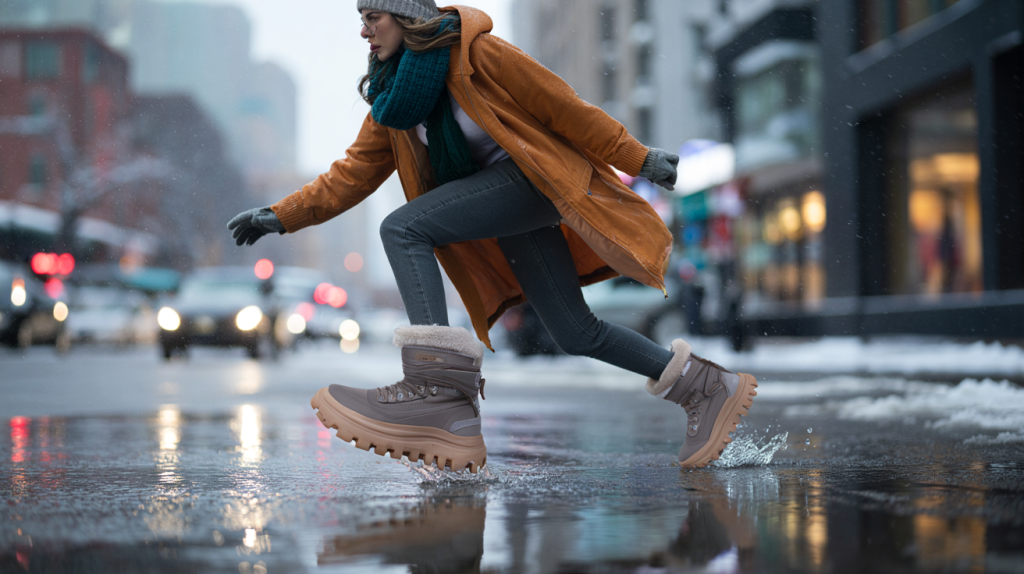
Meta description : Warm winter sneakers for women with real-world tips on insulation, grip and waterproofing. Understand the tech, avoid cold toes, pick the right pair fast.
Warm winter sneakers for women : what baskets hiver femme chaudes really deliver
Cold sidewalks, wet slush, and a city day that will not slow down. That is where warm winter sneakers – the true baskets hiver femme chaudes – earn their keep. The winning formula blends insulated linings, a waterproof or water-resistant membrane, and winter rubber that stays flexible when the thermometer dips.
Here is the short answer. Look for 200 to 400 gram insulation depending on your routine, a waterproof-breathable liner for slush and light snow, and an outsole with deep, widely spaced lugs for grip. This setup keeps feet warm without the bulk of a boot, perfect for commutes and long errands when style still matters.
Insulation that works : 3M Thinsulate grams, linings, and breathability
The main idea is simple: trap warm air, move out moisture. Many winter sneakers use synthetic fills or 3M Thinsulate, often labeled 100 g, 200 g, or 400 g. REI Co-op explains that 200 g insulation suits everyday cold-weather use, while 400 g pushes into deeper cold or lower activity levels (REI Co-op, 2023 – How to Choose Winter Boots). 3M positions gram ratings as a warmth indicator per square meter, with higher numbers providing more thermal protection for the same activity level (3M Thinsulate, 2024).
Breathability matters because sweat cools fast. A membrane such as Gore-Tex helps move moisture out while blocking water from getting in. Gore-Tex describes its footwear technology as “durably waterproof, windproof and breathable” across product categories (Gore-Tex, 2024). That balance prevents clammy socks – a common reason toes feel cold even in insulated shoes.
One catch shows up often: fit. Shoes that are too snug compress insulation and reduce the warm air layer around your toes. A half size up can offset thick socks and winter swelling, especially late in the day when feet have expanded a little.
Grip and waterproofing : Gore-Tex, rubber lugs, and real-world safety stats
Observation first. Most slip-ups happen when rubber stiffens in the cold or lugs cannot bite into slick ground. Winter compounds from major outsoles stay softer in freezing temps and adopt toothier lug shapes to channel slush away. That is the mechanical edge you feel the moment you step off the curb.
There is also a safety angle. The Centers for Disease Control and Prevention reports that more than one out of four adults aged 65 and older falls each year, and “one out of five falls causes a serious injury” such as a fracture or head injury (CDC, 2024 – Important Facts about Falls). Footwear with cold-ready rubber and defined tread helps reduce those risky slips on wet or icy pavement. Not magic, just better contact with the ground.
Waterproofing is a spectrum. A full bootie-style membrane keeps slush out during puddle splashes. Water-resistant uppers handle flurries and short exposures. REI Co-op also notes that brand temperature claims vary and are not standardized, so rely on insulation weight, activity level, and sock system rather than a single number (REI Co-op, 2023). That small detail saves a lot of chilly mornings.
Sizing, care, and smart buys : checklist to pick the right pair in 2025
Here is the missing piece that ties warmth, grip, and comfort together: a simple, practical selection routine that works in store or online. Short, human, and effective.
– Try at day’s end with the socks you plan to wear and leave a finger-width at the toe for warm air and circulation.
– Target 200 g insulation for active city days and 300-400 g for long, colder waits at the bus stop or stadium. Go lower gramms only in milder climates.
– Choose a waterproof-breathable membrane for slush-heavy commutes. Water-resistant is fine for dry cold.
– Check outsoles: winter rubber that bends at room temperature and visible, spaced lugs for snow release. Smooth fashion bottoms are for dry floors, not icy corners.
– Pair with moisture-wicking socks – merino or technical synthetics – to move sweat away and keep insulation effective.
– Add a removable insole with thermal foil if you run cold. It boosts underfoot warmth without changing the upper.
– Spot-clean salt quickly and air-dry at room temperature. High heat can damage adhesives and membranes.
The logic stands. Warmer feet come from three aligned choices: appropriate insulation, breathable waterproofing matched to your weather, and true winter traction. Those details are visible on spec sheets and easy to test by hand – flex the sole, read the insulation label, and check for a seam-sealed bootie. Then choose the silhouette that fits your style so the pair gets worn, not stored.
For reference : REI Co-op offers insulation and traction guidance in its winter boot buying advice (2023). Gore-Tex publishes clear performance claims for its footwear membranes. The CDC anchors the safety context with national fall statistics updated in 2024. Links here for deeper reading : CDC – Important Facts about Falls, REI Co-op – How to Choose Winter Boots, Gore-Tex Footwear Technology, 3M Thinsulate Insulation.