
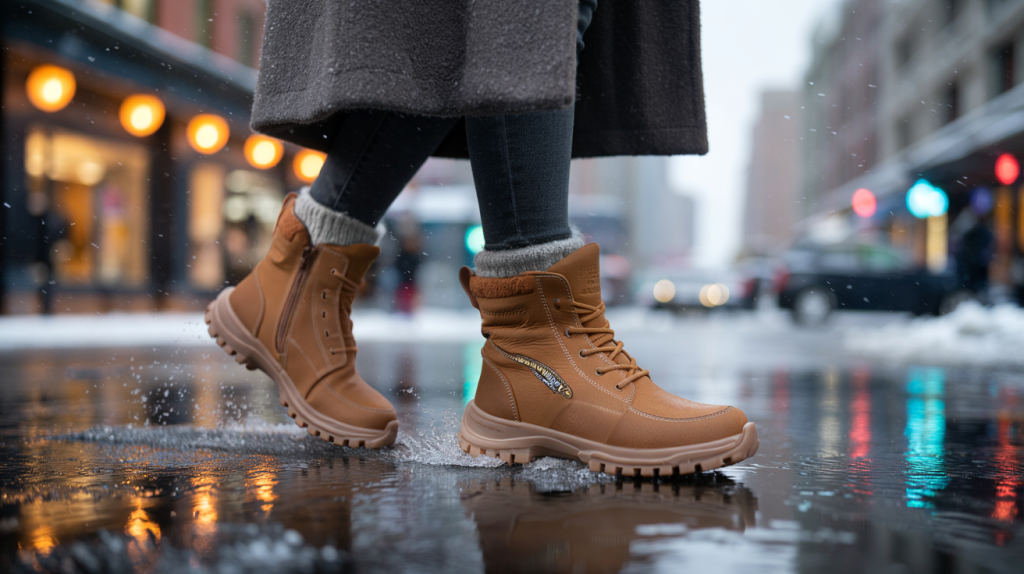
Meta description : Warm women’s winter ankle boots decoded: insulation grams, waterproof ratings and real grip tips to choose bottines hiver femme chaudes that truly stay cozy.
Ice on the pavement, wind in the bones, and a daily question: which warm women’s winter ankle boots – bottines hiver femme chaudes – actually keep feet toasty without feeling like ski boots? Shoppers are right to be picky. Warmth comes from a precise mix of insulation, waterproofing and grip, not from fluff alone.
Here is the heart of it, upfront. Aim for proper insulation weight, a real waterproof-breathable membrane, and a winter-rated outsole. Think 200 to 400 g insulation depending on your climate, a membrane in the 10,000 to 20,000 mm waterproof range, and a rubber that grips on snow, not just wet tiles. Then add a roomy toe box for thick socks, ankle height that seals drafts, and a liner that dries fast. The difference shows on day one.
Warmth first: what problem these ankle boots actually solve
Cold feet rarely come from air alone – they come from moisture and compression. Snow melts on warm skin, socks get damp, and heat escapes. Boots that lock out water while letting sweat escape keep toes warmer, longer, during a full commute or a school run.
Another trap lives in the fit. If toes are squished, blood flow drops, and no insulation can compensate. That is why a half-size up to accomodate winter socks often beats a snug fashion fit. Comfort is not a luxury here, it is heat management.
City winter changes by the hour. Slush at 8 a.m., dry cold at lunch, black ice after sunset. A single pair that handles all three saves time and prevents the “carry spare shoes” routine. The right outsole and midsole geometry matter as much as the lining.
Waterproofing, insulation and grip: the trio that changes everything
Water is the real thief of warmth. The U.S. National Weather Service notes that water conducts heat away from the body up to 25 times faster than air. Translation for boots: once socks are wet, warmth vanishes quickly. Sealed seams and a waterproof membrane are non‑negotiable for slush days.
How waterproof is waterproof? REI Co‑op’s expert guide explains that fabrics rated around 10,000 to 20,000 mm resist sustained rain and wet snow, while still breathing enough for active use (guide updated in 2022). Many winter boots use similar membrane tech behind the lining, so those numbers are a useful compass.
Insulation is your second pillar. 3M describes its Thinsulate weights in plain terms: around 200 g insulation suits cold city wear where movement keeps you warm, while 400 g targets very cold or lower‑activity conditions. Pick the gram weight for your weather and your routine – brisk walks need less than long static waits on a platform.
Grip is the third leg. Look for winter‑specific rubber that stays flexible in the cold and lugs that shed slush. Some outsoles cite standards like ASTM F2913 for slip testing – not a fashion label, a practical clue. On real sidewalks, flexibility at freezing temps often beats a hard, glossy sole.
Sizing, comfort and socks: small choices, big warmth
Feet swell slightly by late afternoon, so trying boots later in the day gives a truer fit. There should be a finger’s width in front of the toes and enough room to wiggle – movement helps circulation and warmth.
Socks do serious work. A medium‑thick merino wool sock manages sweat and reduces blisters far better than cotton. Two thin layers can beat one thick layer by moving moisture away from skin. That tiny upgrade often feels like a bigger boot change.
Insole tech helps too. OrthoLite reports its open‑cell foam retains about 95 percent of thickness over time, which keeps underfoot cushioning consistent across a season. Removable insoles also let you add a supportive footbed if needed, or dry them quicker at night.
Here is a quick checklist that saves time in store and online:
- Insulation: 200 g for active city cold, 300‑400 g for deeper winter or low activity
- Waterproofing: sealed seams plus membrane in the 10,000‑20,000 mm range
- Outsole: winter rubber that stays flexible in cold, defined lugs, tested traction mention
- Height: 12‑15 cm ankle to block drafts and splashes under jeans
- Fit: wiggle room at toes, midfoot secure, space for merino socks
- Liner: dries overnight, soft collar to prevent rubbing
- Closure: laces for adjustability, side zip for fast on‑off
Care and durability: keep bottines hiver femme chaudes performing
Warmth fades if materials clog or crack. After wet days, pull the insoles, stuff with paper for an hour, then air dry away from direct heat. High heat can damage adhesives and leather finishes, so patience wins.
For leather, a gentle clean, then a conditioner, then a water‑repellent spray restores the finish and helps beads roll off. For textiles, reproof with a DWR spray when water stops beading. That thin surface treatment supports the membrane underneath and cuts drying time.
Road salt can stain and dry out uppers. A quick wipe with a damp cloth after each outing keeps it from building up. Rotate pairs if possible – materials rebound better with a day off, and liners dry fully between uses.
One last tweak often missed: swap in fresh insoles mid‑season if cushioning feels flat or odors linger. A small, inexpensive change, yet it restores comfort and warmth because dry, cushioned feet stay warmer than compressed, damp ones. Simple, and it works.