
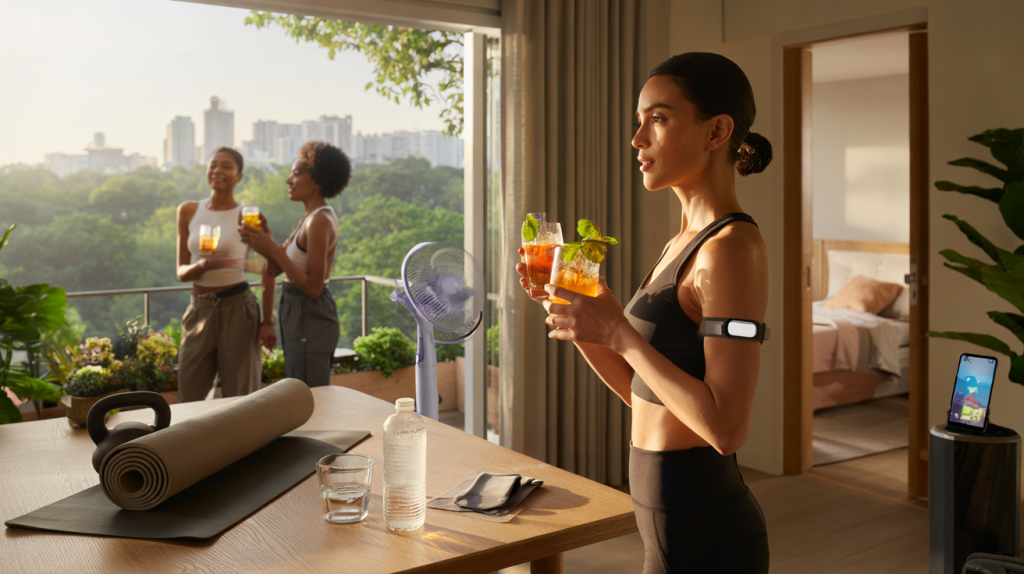
By 2026, wellness shifts from weekend luxury to daily utility. Expect a sharper focus on sleep and stress, alcohol free socializing, climate smart routines and quieter tech that does more by doing less. The Global Wellness Institute values the wellness economy at 5.6 trillion dollars in 2022 and projects it to reach 8.5 trillion dollars by 2027, a signal that mainstream habits are changing fast.
The pressure is real. The World Health Organization estimates that one in eight people live with a mental health condition. Copernicus Climate Change Service confirmed 2023 as the warmest year on record, pushing heat and recovery into everyday health planning. Readers came for the roadmap. Here it is, grounded in what data already shows and where consumer behavior is heading.
Wellness Trends 2026: What the numbers already tell
Market scale explains momentum. The Global Wellness Institute’s projection to 2027 underlines sustained investment across sleep, mental fitness, fitness coaching and nutrition. Telehealth has not vanished after the pandemic sprint. McKinsey reported that virtual care stabilized at roughly 13 to 17 percent of outpatient visits in 2021 and 2022 compared with low single digits before 2020, anchoring at home support as a normal first step.
Fitness direction looks settled too. The American College of Sports Medicine’s Worldwide Survey of Fitness Trends 2024 placed wearable technology at the top, while strength training and health coaching ranked high, reflecting a move toward measurable progress and guided behavior change. That is not a fad. It is consumers asking for feedback loops that fit busy lives.
Work culture matters. A large scale United Kingdom pilot run by 4 Day Week Global in 2022 reported that most participating companies kept the new schedule, while self reported well being improved and turnover dropped. When time pressure eases, people actually use it for sleep, movement and family meals. Simple, but it tracks with the data.
Sleep, circadian health and stress care take the front seat
Sleep is the entry point because it touches everything. The United States Centers for Disease Control and Prevention has long warned that about one in three adults do not get enough sleep. In 2026, expect more practical circadian routines at work and at home, from morning light exposure to evening screens placed out of the bedroom.
Stress strategies turn pragmatic. WHO’s mental health figure frames the urgency, while coaching and breath techniques spread through workplaces and schools. Two hours a week in nature is a strong target. Research led by the University of Exeter in 2019 found that at least 120 minutes in natural environments per week was linked with better health and well being outcomes. That is specific, measurable and free.
Heat changes recovery. After the 2023 heat record, gyms, runners and outdoor workers adjust timing, hydration and cool down protocols. Expect smart fabrics and low noise fans, but also a return to old basics like shade, siesta style breaks and evening walks. The win is fewer interrupted nights and steadier energy the next day.
Alcohol free social life, food for mood and workplace energy
Social rituals are rewriting themselves. IWSR reported that the no alcohol and low alcohol category grew by 7 percent in 2022 and was valued around 11 billion dollars, with further growth expected through the mid decade. Menus now include complex zero proof options, making moderation normal rather than a statement.
Food patterns follow mood, not restriction. Protein forward breakfasts, fiber rich snacks and steady carbs calm energy dips that trigger anxiety and late caffeine. Workplace design becomes part of the health stack. A well known analysis in Health Affairs by Katherine Baicker and colleagues found positive returns for employer wellness programs, including medical cost savings per dollar invested. Precision varies by program, but the direction is consistent when initiatives are voluntary and well targeted.
One more shift stands out. Menopause and andropause care steps into the light with specialist clinics, wearables offering temperature tracking and evidence based coaching. People asked for less noise and more clarity. They will get symptom tracking that links to actionable routines, not just supplements.
Tech gets personal: from loud tracking to quiet guidance
Wearables evolve from badges to background. ACSM’s top ranking for wearables matches what users want in 2026: low friction recovery scores, daytime prompts for short walks, and sleep staging that nudges earlier wind downs. The difference is restraint. Fewer notifications, more weekly summaries and coaching embedded in the routine people already have.
Care then flows across channels. With telehealth stable, digital check ins pair with in person care when needed. For chronic stress or poor sleep, that looks like a short remote assessment, a plan tied to WHO movement guidelines of 150 to 300 minutes of moderate activity weekly, and follow ups that check habit adherence rather than just symptoms.
Practical matters still decide outcomes. So the winning playbook for 2026 is not flashy. It is consistent, slightly boring, definitly effective.
Try these small, evidence rooted moves that match the trends without overhauling your life :
- Aim for 7 to 9 hours in bed and get morning light within one hour of waking. The CDC sleep gap closes faster with routine.
- Book two nature sessions per week of about 60 minutes each. The University of Exeter threshold was 120 minutes total.
- Swap two weekly drinks for alcohol free options. IWSR data shows the category is ready in stores and bars.
- Add two strength sessions focused on large movements. ACSM’s trend list points to strength as a lasting anchor.
- Use your wearable for weekly insights, not minute by minute micromanagement. Let it coach, then pocket the phone.