
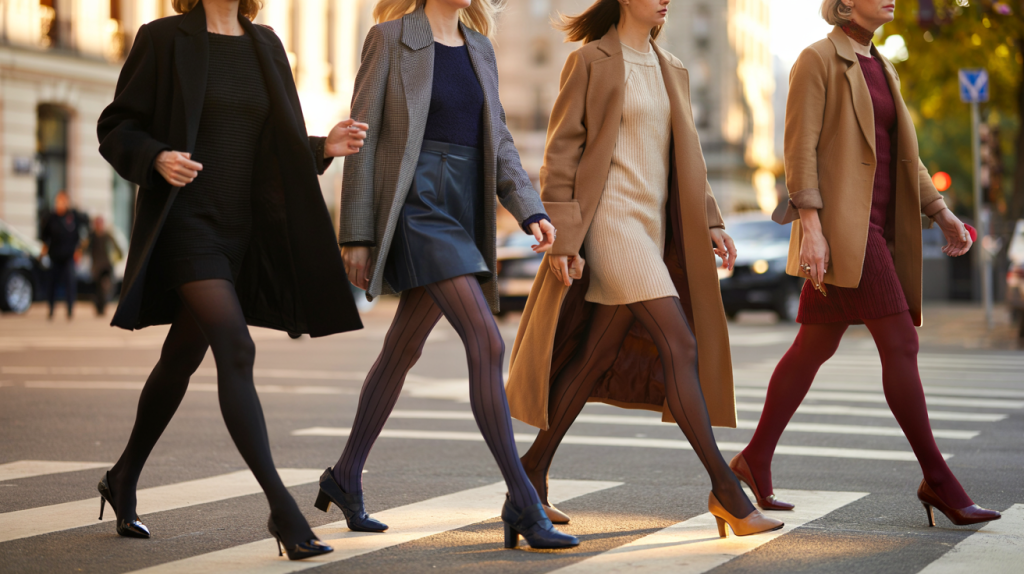
What color tights after 40: the answer you actually need
Black, nude, navy, brown, burgundy… the list feels endless when you just want to look polished. The old rule that certain shades are off-limits after 40 has faded. Today, the smart move is to pick color by opacity, contrast, and outfit mood so the leg line looks sleek and intentional.
The context helps. Tights do two jobs: they refine the silhouette and they connect shoes to hem. So the right color is the one that lengthens the leg line you have, complements your clothing palette, and fits the light of the season. Keep reading for the exact shades that work best and why.
Flattering shades by tone, outfit and season
Here is the short, clear answer many search for. Choose deep black for graphic structure, charcoal or navy for softer polish, rich espresso or chocolate to warm neutrals, sheer nude that matches your undertone for bare-leg effect, and a restrained accent like burgundy or forest to energize winter knits. That definitly helps.
Now the nuances. Black looks sharp with monochrome or high-contrast looks; it can feel heavy with pastel dresses. Charcoal and navy soften dark outfits without losing refinement. Browns connect beautifully with camel, beige, tan, denim, and animal prints. Sheer nudes are not one color: match depth and undertone so the transition from foot to skin feels seamless, not grey or orange. Accent shades work when they repeat a color already in your outfit – scarf, print, or shoe.
Season matters. Autumn to early spring favors opaques and darker tones. In late spring, a 20 denier sheer in a skin-matching shade keeps dresses wearable while staying light. If you love pattern, choose micro-patterns like a tiny dot or herringbone in black or charcoal so the texture reads modern, not costume.
What the fabric science and data say: denier, comfort, trends
Denier is your compass. Wolford’s legwear guide explains that denier measures yarn thickness: roughly 10 to 20 denier is sheer, 30 to 40 semi-opaque, 50 to 70 opaque, and 80+ very opaque or thermal. Source: Wolford Legwear Guide, accessed 2025. wolford.com
That scale shapes color decisions. Dark colors at 60 to 80 denier read crisp and uniform, ideal with ankle boots and structured skirts. Sheers at 15 to 20 denier in black create a veiled effect that looks evening-ready. Nudes at 15 to 30 denier look believable when undertone matches yours – pink-beige for cool, golden-beige for warm, neutral-beige for olive.
Sun protection is a quiet bonus. The Skin Cancer Foundation notes that UPF 50 fabric blocks 98 percent of UV rays. Source : Skin Cancer Foundation, UPF basics, accessed 2025. skincancer.org Many opaque tights inherently limit UV exposure, which helps on bright winter days or at altitude.
Color mood shifts with culture too. Pantone named “Peach Fuzz” as the Color of the Year for 2024, a soft, luminous peach announced in December 2023, signaling a wider taste for warm, enveloping tones. Source : Pantone, Dec. 2023. pantone.com Translation for legs: earthy browns and wine tones feel contemporary with camel coats, cream knitwear, and tan leather.
Your effortless edit: the 5 pairs to buy after 40
A small rotation works across outfits, offices, and weekends. Keep it tight – pun intended – and focused on shades that lengthen, refine, and feel current.
- 60–80 denier black opaque : the do-it-all leg refiner for skirts, sweater dresses, and ankle boots.
- 50–60 denier charcoal or navy : softer than black, perfect with grey tailoring, indigo denim, and navy knits.
- 50–70 denier espresso or chocolate : warms camel, beige, cream, and tan leather without cutting the leg line.
- 15–30 denier sheer nude matched to your undertone : believable bare-leg look for dresses and heels year round.
- 40–60 denier accent shade in burgundy, bottle green, or deep ink : one controlled pop that echoes a color in your outfit.
Fit still decides everything. A comfortable waistband and a size that does not dig or sag makes any color look sharper. Shoes seal the deal: match tights to shoe color for a longer line or to the skirt for a modern block. If in doubt, place the darkest shade at the shoe and let color rise gradually to the hem.
One last note on longevity. Wash in a mesh bag, cool cycle, air dry. Rotate pairs to reduce snags. When a favorite shade trends up – say burgundy in fall – restock early, as seasonal colors sell out fast. Sounds strict? Not really. It is a simple system that lets color work for you, not against you.