
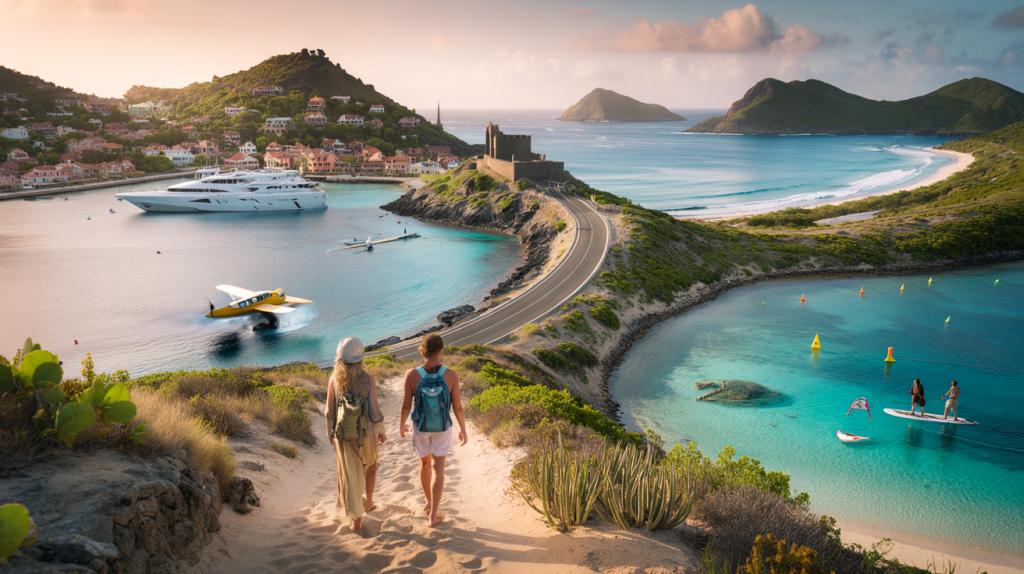
St Barts is tiny, just 25 square kilometers according to INSEE, yet it feels larger once feet hit warm sand and the day starts rolling. The island counts 14 public beaches listed by the Territorial Tourism Committee, many untouched by buildings, all different in mood. That mix is the reason travelers search what to do in Saint-Barthélemy. Clear answers are right here, fast and practical.
Expect Caribbean light and French flair. Land on the short runway at Gustaf III Airport, 646 meters per the French civil aviation authority, and the tone is set. A swim at Shell Beach before sunset, the hike to Colombier, snorkel in Grand Cul de Sac where the marine reserve protects turtles since 1996, shop and dine in Gustavia, then slow down. The island lives at 27 degrees on average most of the year says Météo-France, with drier months from December to April, so plans can stay simple.
What to do in Saint-Barthélemy right now
Time is precious on arrival. Start easy with St Jean for a first swim and plane-watching as propellers drop close to the sand. Then move to Shell Beach in Gustavia for a golden hour that turns pink over the harbor. That one is a crowd pleaser, photo friendly, quick to reach.
Morning fits Saline or Gouverneur when light is soft and the sea reads turquoise. Both are undeveloped, framed by hills, and give the wild side many dream of. Midday suits a pause in Gustavia, the capital built around its 18th century harbor, where the ruins of Fort Karl add a short climb and a view over red roofs and megayachts.
With half a day free, save space for Colombier. Park near Petite Anse, then walk about 20 minutes down a rocky path. The cove stays calm, fish move in schools, and silence arrives fast. The spot sits inside the Réserve Naturelle de Saint-Barthélemy that covers roughly 1,200 hectares since 1996, a useful detail if wildlife matters to the plan.
Beaches and lagoons in Saint-Barthélemy
Each beach has a purpose. Saline is for long swims and barefoot walks. Gouverneur is for a classic postcard, clear and deep blue. Lorient works for families thanks to a calm area near the reef and a surf break further out when swell arrives.
Grand Cul de Sac is different. A shallow lagoon runs for hundreds of meters, ideal for paddleboard, kayak and safe snorkel with juvenile turtles. The water stays flat even on windy days because the reef blocks the chop, a rare comfort for beginners. The marine reserve zones are marked, and rules are posted on offical panels.
Anse de Grande Anse and Flamands bring space. Flamands is the largest beach on the island, good for early walks and breakfast nearby. When the trade winds rise, swimmers shift to St Jean or Shell where the curve of the bay gives more shelter.
Outdoor adventures and day trips from St Barts
Hiking is short and rewarding. Morne du Vitet at 286 meters is the highest point of the island, with views that settle any debate about color gradients. Trails to Colombier and the natural pools near Petit Cul de Sac require sneakers and water, nothing fancy.
On the water, day boats reach Île Fourchue for snorkeling in clear pelagic water. The rocky islet sits inside protected zones, fish life feels dense, and midday light brings out the cobalt. Kayaks can reach Île Chevreau or Île Frégate from the north coast when seas are calm, always checking local advice first.
Curious about a quick change of scene. Ferries from Saint Martin run in roughly 45 minutes to one hour depending on sea state, with multiple daily crossings in high season according to the operators schedule. Back on St Barts, January hosts the St Barts Music Festival founded in 1985, while March brings the St Barths Bucket Regatta that turns Gustavia into a theater of tall masts and race starts.
Food, shopping, nightlife and practical tips in Gustavia
Gustavia mixes duty free boutiques, bakeries, beachwear and art galleries. Prices vary widely, yet a simple plan keeps it balanced. Pastry and coffee for breakfast, a beach picnic at noon, then a sit down dinner as the harbor lights come on. Live music nights pop up in season, and happy hour on the sand stays a classic before dinner.
For travelers who like clear steps, these essentials keep days smooth.
- When to go : dry season from December to April per Météo-France, with peak hotel demand around Christmas and New Year, rainy peaks in September and October.
- Getting around : rental car or scooter gives access to most coves, taxis are limited at night, roads are steep and narrow in places.
- Money : euro on the island, cards widely accepted, some small snack spots take cash only.
- Safety : strong sun year round, reef safe zones are marked by the reserve, swimming is not supervised.
- Access : Gustaf III Airport handles small aircraft from Saint Martin and Guadeloupe, ferries link from Saint Martin in under one hour depending on route.
One last detail brings everything together. The island counts roughly 9,961 residents in 2021 according to INSEE, which explains the balance between village pace and upscale service. Book tables in high season, choose one new bay each day, leave room for weather shifts, then follow the light. The formula works because the setting does the heavy lifting.