
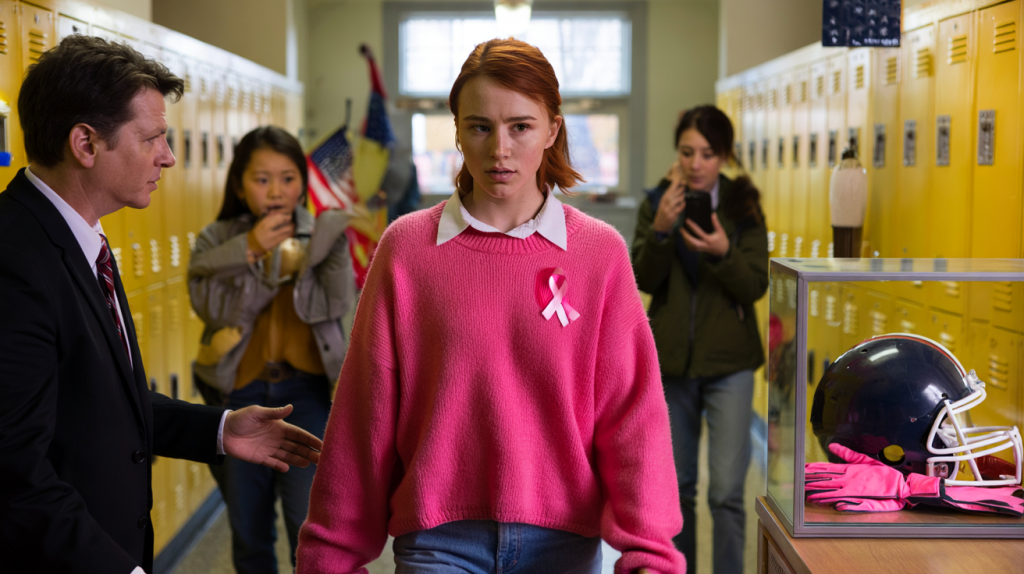
A pink sweater looks harmless. Then a hallway argument starts, a classroom rule kicks in, a clip goes viral. Across the United States, this soft color keeps lighting matches in places that try to avoid fire: schools, offices, stadiums, even city halls. The question lands fast: how did a cozy knit turn into a cultural flashpoint.
Pink sits at the crossroads of identity, politics and marketing. It signals charity in October, trend in summer, and for some, a position in today’s gender debate. That mix explains why every new “pink sweater controversy” feels bigger than cloth. The stakes sound familiar: freedom of expression, inclusion, and the boundaries set by institutions that must keep order.
From Barbiecore to backlash: why pink still divides in the U.S.
Color carries history. Pink was marketed for girls through the 20th century, then reclaimed as fashion, satire and power. In 2023, Greta Gerwig’s “Barbie” arrived on 21 July and crashed box-office records, crossing 1.44 billion dollars worldwide according to Box Office Mojo. The Barbiecore wave pushed pink from runway to street in days.
Yet the same color collides with a tense social climate. Pew Research Center reported in 2023 that 60% of U.S. adults say gender is determined by sex at birth. For others, clothing is part of gender expression that should be protected. When pink appears on a student or an employee, those different baselines bump into each other.
So the reaction is rarely about wool or dye. It is about what observers think the sweater means. For some, support for acceptance. For others, pressure to conform. That gap feeds the cycle: one act, two interpretations, endless comment threads.
Schools and dress codes: where a pink sweater becomes a statement
Public schools sit on the fault line. The U.S. Supreme Court ruled in 1969 in Tinker v. Des Moines that students do not shed their constitutional rights at the schoolhouse gate. Clothing can count as expression when it carries a message, as long as it does not materially disrupt class.
Title IX, enacted in 1972, bars sex discrimination in education. Dress codes that police gendered clothing face legal scrutiny when they treat students differently. Civil liberties groups have argued in guidance that rules should focus on safety and learning, not stereotypes.
Administrators still need classrooms that function. That is where pink becomes tricky. If a sweater is seen as a slogan, some principals call it a distraction. If it is simply pink, they risk punishing a student for nothing at all. The line shifts with context, age group, and recent events in the community.
Brands, sports and October: when pink turns corporate
Pink also speaks the language of marketing, and that blurs motives. Since 2009, the National Football League has highlighted breast cancer awareness every October, wearing pink gear and dedicating broadcasts to the cause. In 2017, the league broadened its “Crucial Catch” effort to address multiple cancers with a wider color palette.
Those campaigns normalize pink as solidarity. But they also create fatigue when audiences sense performative gestures. The same sweater that reads as support on a Sunday broadcast can look like opportunism in a Monday meeting. People notice when symbols feel mandatory rather than chosen.
This is why a single garment can spark conflict accross different spaces. The meaning changes fast with setting, timing and who is wearing it. One color, several narratives.
How to defuse a pink sweater dispute without fanning the flames
Escalation is not inevitable. Most disagreements cool when institutions clarify intent and process early, in plain words, and with consistent application of rules.
Here is a simple playbook that tends to work in schools, workplaces and community venues:
- State the rule and the legal anchor first, not opinions: cite Tinker for schools, Title IX for equal treatment, or a written dress policy for offices.
- Ask what the wearer intended. If the answer is comfort, end there. If it is a message, assess disruption, not popularity.
- Apply the same standard to all colors and causes. Consistency calms people faster than long explanations.
- Offer alternatives when needed: allow pins or permitted days for causes to channel expression without derailing routines.
- Document the decision with date and context, then revisit it after tempers cool to check if the rule still makes sense.
For brands and sports bodies, transparency helps. Disclose who benefits, how much money is raised, and for how long a campaign runs. Audiences respond better when they see numbers and dates than when they hear slogans.
When leaders treat a pink sweater as both clothing and potential speech, they reduce confusion. Facts give guardrails. History provides perspective. The missing piece is usually timing: set expectations before the next trend hits, not after a clip takes off on social media.