
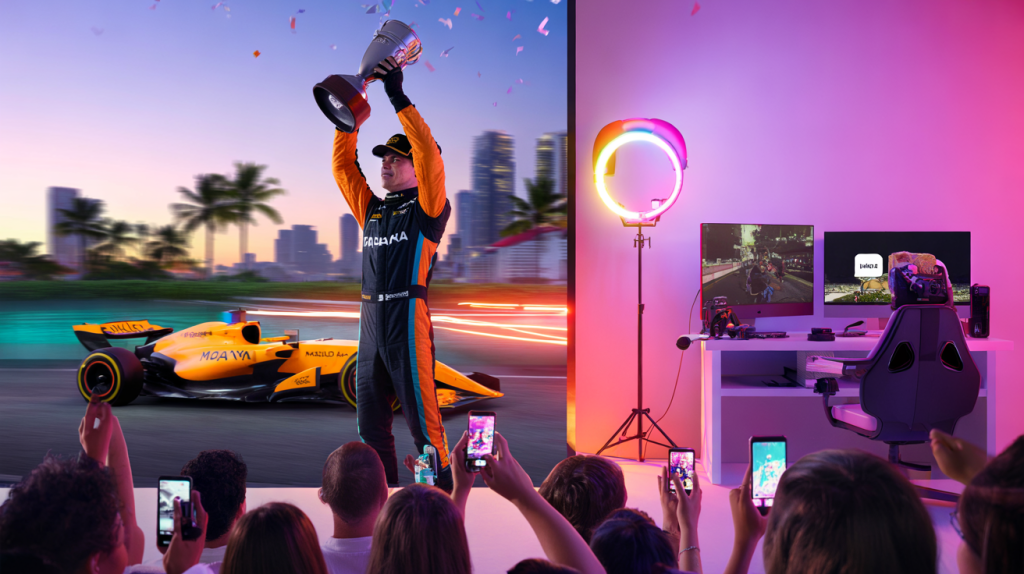
Lando Norris and Gen Z: the fast-track connection
Scroll any race weekend and the pattern pops: Lando Norris trends where Gen Z lives. The McLaren driver blends elite pace with creator moves, which pulled in young fans long before podiums became regular. That mix now meets results after his first Formula 1 win at the Miami Grand Prix on 5 May 2024.
The numbers back it up. In the “F1 Global Fan Survey 2021” by Motorsport Network with Formula 1 and Nielsen Sports, from 167,302 responses across 187 countries, Norris ranked second most popular driver overall and first among fans aged 16 to 24. His appeal tracks with how Gen Z consumes sport: social-first, creator-led, and interactive.
The receipts : survey data, viewing figures and dates
Start with proof, not vibes. That 2021 survey did not just crown favorites, it mapped a younger audience shifting toward drivers who act like creators as well as athletes. Norris sat right in that lane, while the fan base itself skewed younger than in previous editions.
Then the U.S. audience changed gear. ESPN reported the 2022 Formula 1 season averaged 1.21 million viewers per race in the United States, up 28 percent year over year. The Netflix effect helped, but so did personalities who show up natively on platforms that teens already use daily.
Gen Z is there already. Pew Research Center’s “Teens, Social Media and Technology 2022” found 95 percent of U.S. teens use YouTube and 67 percent use TikTok. Norris built touchpoints exactly in that space during 2020 lockdowns, regularly streaming races and games on Twitch, then formalizing it with Quadrant in November 2020, a gaming and lifestyle collective that posts like a creator house, not a team press room.
Inside the playbook : Norris, Twitch and Quadrant
There is a pattern to how this worked. Norris lowered the wall. Twitch streams turned a driver into a person with a headset, real-time chat, and in-jokes. That made high-speed weekends feel less distant and more like a community you can join.
Quadrant gave it structure. By launching a content group in November 2020, he kept a steady cadence outside race weeks, mixing gaming, challenges and behind-the-scenes pieces that travel well on TikTok and YouTube. The tone stays low-pressure, a little chaotic, deliberately unpolished. That reads authentic to a generation trained to skip ads in half a second.
Brands clocked it too. When a driver’s content already lives where Gen Z watches, sponsorships fit the feed instead of interrupting it. The result looks native rather than forced, and that is where millenial-era playbooks often fall down.
For readers who want the short map, here are the levers that actually moved the needle for Lando Norris with younger fans :
- Be present on creator platforms : Twitch during 2020, then consistent YouTube and TikTok output.
- Build a separate content engine : Quadrant keeps stories flowing when F1 goes quiet.
- Invite participation : live chat, fan-designed helmet drops, and meme-friendly moments.
- Let performance catch up to personality : Miami 2024 sharpened the narrative with a clear sporting milestone.
What teams and brands can do now to reach Gen Z fans
The mistake is to chase one viral clip. Gen Z loyalty forms over repeated, human moments that stack into a believable story. Norris’ path shows a sequence: access first, entertainment second, results third. When the Miami win landed, the audience was already warmed up.
There is also a format lesson. F1’s paddock video looks slick. Norris’ ecosystem is intentionally looser. It matches the platform physics that Pew data describes: YouTube for longer arcs and explainers, TikTok for in-jokes and quick reactions, Twitch for live presence. Each tool does a different job, and together they reduce the distance between driver and fan.
Zoom out and the timing helped. Netflix’s “Drive to Survive” started in 2019 and reset the on-ramp for casuals. As U.S. viewership climbed in 2022 per ESPN, Norris already behaved like a creator inside a sports property that suddenly felt bingeable. The combination accelerated his reach with younger demographics without needing heavy-handed marketing.
The takeaway for rights holders is plain : empower athletes who can carry a camera as naturally as they carry pace, and give them room to build side projects that do not look like corporate content. The missing piece is consistency. Norris did not switch it on for a launch and vanish. He kept showing up, then backed it with a 5 May 2024 victory that gave every new fan a reason to stay through the next lap.