
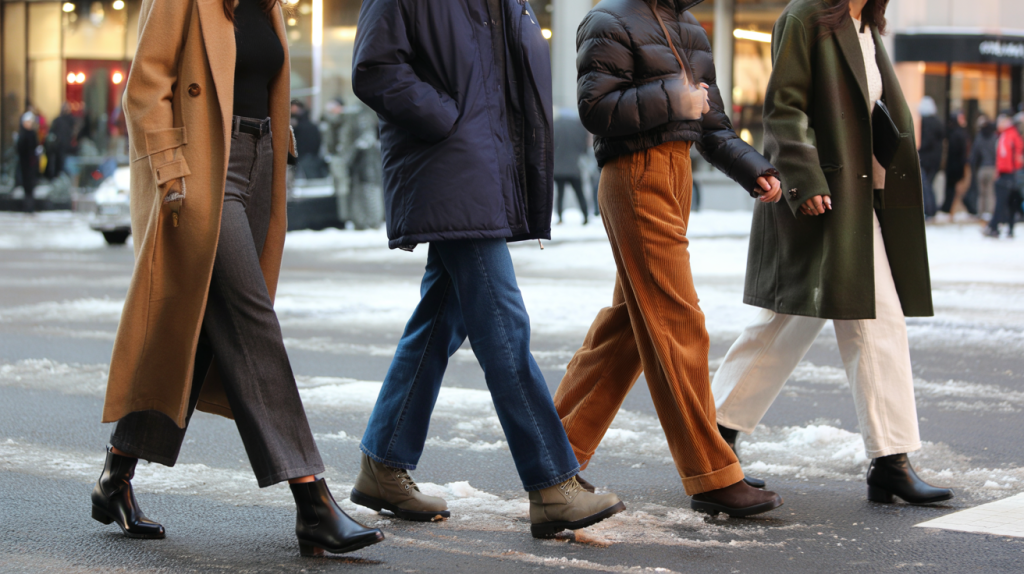
Winter 2025 alternatives to bootcut jeans: what stands out now
Bootcut had a good run. Yet Winter 2025 pivots to pants that feel warmer, look sharper, and slip over chunky boots without the drag. Think wide-leg wool trousers, tailored cargos, dark straight-leg denim and barrel shapes that stack cleanly above laces. The silhouette shift shows up in stores and on cold streets: volume at the hem, yes, but with structure and heat.
Searchers want the swap right away, not a trend lecture. Here it is: move from bootcut to fluid wool tailoring, corduroy with mid-wale texture, fleece-lined leggings under skirted layers, rigid straight denim in deep indigo, or modern barrel jeans with a cropped ankle. These options streamline winter outfits, play nicely with parkas and Chelsea boots, and avoid soaked hems on slush days. The wardobe breathes, and mornings get faster.
Why the bootcut pause makes sense in Winter 2025
The main idea lands fast: winter needs warmth plus clean proportions that work with heavy outerwear. Bootcut often flares too low, brushing puddles and snow. A straighter or cropped break removes that problem and keeps socks and insulation in play.
There is also a real market context. The Business of Fashion and McKinsey projected fashion industry growth at 2 to 4 percent for 2024, a steady pace that favors practical, repeatable silhouettes over novelty shapes. Brands have doubled down on wear-again trousers, technical linings and smarter fabrics that earn their space day after day. Source matters when talking longevity.
Fabric science tells another part of the story. The Woolmark Company notes merino fibers can absorb up to 35 percent of their dry weight in moisture vapor while insulating, and finer fibers often feel softer against skin. That comfort shows up on commutes. Pair merino-blend pants with thermal socks and winter boots insulated at 200 g for brisk city days, 400 g for deeper cold, guidelines frequently used by 3M Thinsulate in footwear charts. Numbers that translate to warm toes.
Smarter warmth: fabrics and fits that beat the cold
Observation first: most chilly-day discomfort starts at the ankle and knee. Cold wind sneaks in, hems wick moisture, and denim gets rigid. Materials fix this faster than a new coat.
- Wide-leg wool trousers : choose lined pairs with a mid-high rise for core warmth.
- Straight-leg rigid denim : deep indigo, no distressing, hem just kissing boot tops.
- Corduroy pants : mid-wale, 8 to 12 wales per inch for warmth without bulk.
- Tailored cargo trousers : cuffed or tapered, with flap pockets kept flat for polish.
- Fleece-lined leggings under midi skirts : heat without the bulk of snow pants.
- Barrel or balloon jeans : cropped at the ankle, roomy through the knee to stack above boots.
Common mistakes keep happening. Hems puddling over lug soles. Stretch denim too thin for wind. Unlined wool that itches. A quick fix helps: hem to the top of the boot shaft, choose 100 percent cotton rigid denim for structure, and look for fully lined wool or a merino blend to soften feel. That small checklist saves a season of trial and error.
Signals from culture guide choices too. Pinterest Predicts reported that 80 percent of its annual style forecasts have come true in recent years, underscoring how utility and mixable basics tend to break through. The result in daily outfits: cargos dressed with knit polos, dark denim with clean sneakers, culottes with high socks and insulated ankle boots. Wearable, not fussy.
Styling tips, pitfalls to avoid, and a simple plan
Let the pants lead. When switching from bootcut to wide-leg wool, shorten the coat hem slightly or belt it to balance volume. For straight-leg denim, pick a dark rinse and a heavier 12 to 14 oz fabric to block wind. Barrel jeans like cropped puffers and mid-height Chelsea boots that meet the hem without a gap.
A few pitfalls: pooling fabric in wet weather, exposed ankle skin in subzero wind, and heavy knits with slouchy pants that double the bulk. If warmth is the goal, line the leg first. Thermal tights under trousers work invisibly, and merino socks lock heat at the shoe opening. Small changes, big comfort.
Now the simple plan that makes the swap stick. Step one : pick one tailored option for office days, one casual option for weekends. Step two : set a hem that clears your most-worn boots by 1 to 2 cm. Step three : add a base layer for true cold spells and keep it. Two bottoms, one base, and the bootcut can sit a season out.
Prices, data and where trends come from in 2025
Budgets vary, yet the cost math leans in favor of non-bootcut silhouettes. Lined wool trousers often last across winters, and straight rigid denim keeps its shape longer than soft stretch blends. That durability lines up with brands chasing repeat wears as the market steadies in 2024 and 2025. Less churn, better fabric, fewer returns.
Retailers reflected the shift through Fall 2024 delivery calendars and early Winter 2025 drops, stacking dark straight jeans and tailored cargos beside shearling boots and shorter puffers. Runways set the spark months earlier, stores turned it into practical product, and city sidewalks did the testing in rain and sleet. The feedback loop ran fast.
Missing piece that closes the loop : fit audits. Try two sizes and two inseams in the same model within one week, take photos with your actual boots, and keep the pair that clears slush while holding a clean line. That tiny at-home trial anchors the trend in real life, not just in lookbooks.
Sources : The Business of Fashion and McKinsey, “The State of Fashion 2024” forecast 2 to 4 percent industry growth for 2024; The Woolmark Company materials guidance on merino fiber moisture absorption and micron fineness; 3M Thinsulate footwear insulation grams guidance for cold conditions; Pinterest Predicts 2024 performance claim of 80 percent prediction accuracy.