
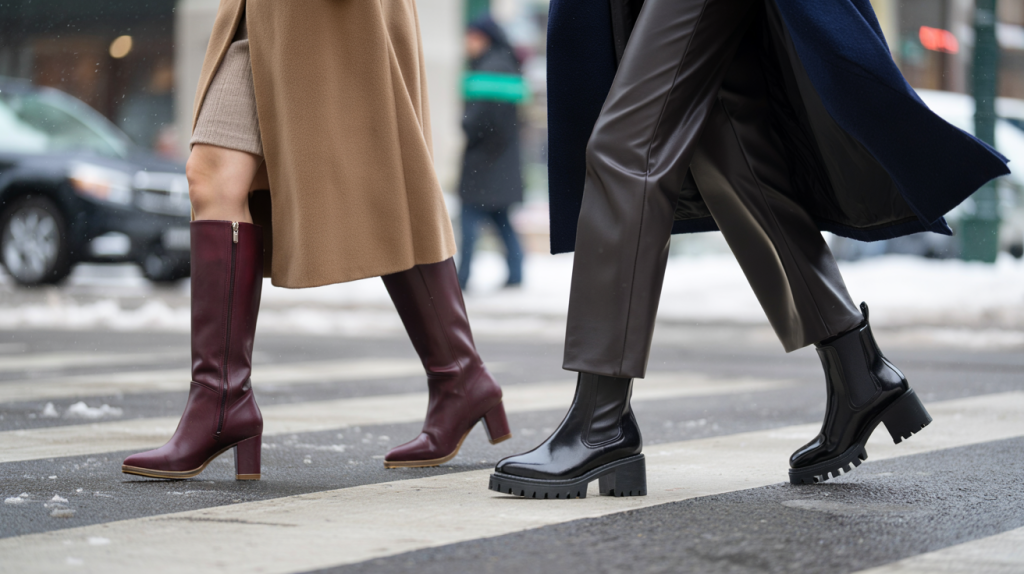
Cold mornings, slick pavements, a busy life that does not slow down after 40 : the right winter boots must pull off a triple win. They need to look polished, keep toes warm, and handle icy sidewalks without drama. The good news : 2025 brings sleek lug soles, waterproof leathers, and lighter insulation that work just as well with tailored trousers as with a midi skirt.
Here is the core update to keep in mind. Ankle and knee-high silhouettes lead the trend, but comfort tech now sits under every stylish pair. Think city-ready profiles with grippy rubber, mid-height stable heels, and weatherproof membranes. The goal is simple : flattering lines and dependable traction, not bulky snow gear. That is exactly what most searches aim for today.
Trendy winter boots for women over 40 : what works now
Shaft height does the visual magic. Ankle boots with a slim shaft skim the ankle bone and lengthen the leg under straight jeans. Knee-high boots in structured leather refine the silhouette over leggings or a pencil skirt. Square or rounded almond toes read modern and roomier than sharp points, which can press the forefoot after long days.
Heels take a measured turn. Block heels between 3 and 5 cm look dressy and stay stable on wet streets. Low platform lug soles bring lift without pitching the foot forward. For dressy nights, a 6 cm sculpted heel still feels elegant, just pair it with rubberized outsole panels that bite.
Comfort, grip and warmth : features that matter after 40
Foot comfort becomes non negotiable with age. An American Podiatric Medical Association survey reported that 77 percent of Americans have experienced foot pain (APMA, 2014). That is why cushioned insoles, arch support, and roomy toe boxes stop the pinch that ruins a commute. Removable insoles help insert custom orthotics when needed.
Traction is not just a winter nice-to-have. The Centers for Disease Control and Prevention states that 1 in 4 adults aged 65 and older fall each year. Better grip earlier in life reduces risk later, especially on wet tile or slush. Look for deep rubber lugs and slip testing claims that reference standards. The EN ISO 20347 : 2022 norm defines SRA, SRB and SRC slip-resistance testing for occupational footwear, and brands increasingly borrow those compounds for city boots.
Warmth without bulk is the 2025 update. Lightweight insulation in the 100 g to 200 g range suits urban wear, while shearling lining at the footbed adds cozy heat without over-sweating. Waterproof or water-resistant uppers matter on salted streets : treated full-grain leather, sealed seams, or a breathable membrane keep socks dry while letting moisture escape.
Avoid these common fit mistakes after 40
Going too small. Feet can subtly widen with hormonal changes and mileage. Size up half a size if wearing thick socks, and check the longest toe has a thumb’s width of room.
Ignoring heel stability. Skinny stilettos sink on cobbles and slick paint lines. A wider base keeps the ankle centered, reducing wobble on curb cuts.
Choosing smooth soles. Even premium leather soles need a rubber insert. Without tread, polished floors and subway platforms become risky fast.
Sticking to stiff shafts. A rigid top that digs into the calf ruins proportions. Elastic gussets or a back zip let the boot hug the leg without squeezing.
Skipping support. After 40 the plantar fascia and Achilles appreciate a small lift. A modest, stable heel or a slight platform offloads strain that flats can cause when worn all day.
Smart shopping guide : styles, budgets and care that last
Here is a quick, evergreen compass for a wardrobe that works Monday to Sunday.
- Sleek lug-sole ankle boot : waterproof leather, 3 to 5 cm block heel, almond toe for daily wear.
- Chelsea with hidden platform : elastic gore, rubber tread, thin platform for a discreet lift.
- Knee-high city boot : structured shaft, inside zip, grippy half sole, pairs with dresses and straight pants.
- Weather boot for storms : sealed seams, insulation, articulated lug sole for slush and light snow.
Prices vary with materials and construction. Full-grain leather and stitched welts cost more upfront, but they can be resoled and outlive glued pairs. If budget sits mid-range, prioritize outsole grip and lining first, then leather quality. For vegan options, look for certified water-resistant microfibers with rubber outsoles rather than smooth thermoplastic.
A fast fit check pays off : walk on a hard floor, flex at the toes, and note any heel slip. A slight slip is normal in lined boots and settles with wear, but rubbing from minute one signals a miss. If arches tire in 20 minutes, add supportive insoles or switch to a built-in support model. Small tweaks avoid returns and make a new pair definitly earn its keep.
Care keeps style fresh. Wipe salt the same day, condition leather monthly in winter, and rotate pairs to let moisture evaporate between wears. Replace worn heel caps and add rubber half soles before they go bald. Those tiny habits extend grip, keep shafts structured, and protect the silhouette that makes winter outfits look sharp.