
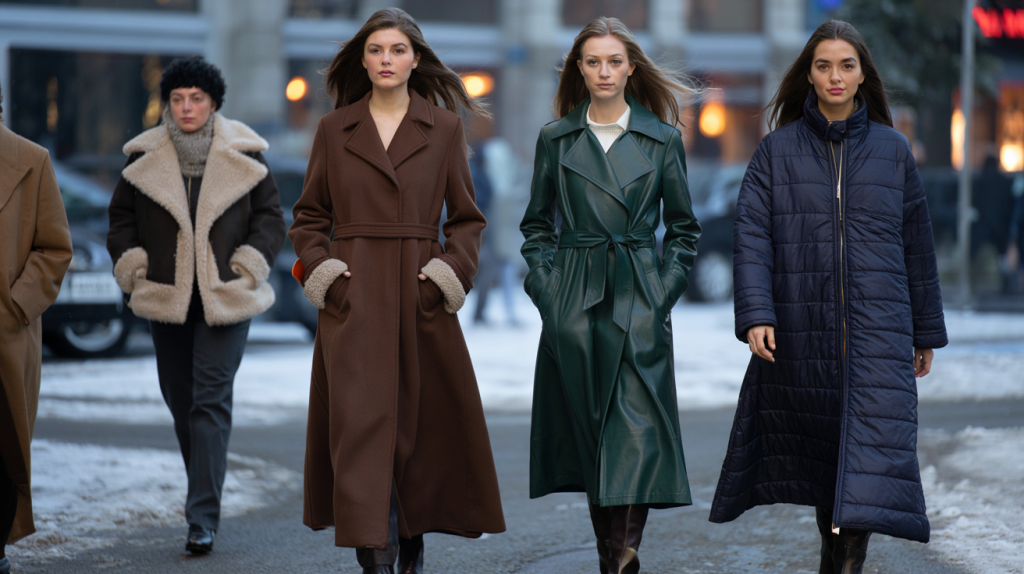
Maxi coats, shearling, leather trenches. Discover the real Winter 2025 coat trends plus data backed tips to buy once, wear for years, and look stunning.
Winter 2025 belongs to statement outerwear that works hard. Think floor sweeping maxi coats, plush shearling, clean leather trenches, sharp waists, and technical quilting that actually insulates. The palette tilts rich and grounded, with chocolate brown, charcoal, midnight navy, forest green, and shots of deep red. That is what showed on the runways and already filters into stores.
Here is the point. Shoppers want warmth, longevity and polish without fuss. Coats need to power commute days, late dinners, and icy weekends. The direction is clear: bigger proportions, tactile textures, less throwaway. Vogue Runway’s Fall 2024 coverage flagged shearling and elongated silhouettes, while The Business of Fashion underlined outerwear as the hero buy of the season. You clicked for the trend map, and this gives it to you straight.
Winter Coat 2025 Trends: What Stood Out on the Runways
Maxi length led the pack. Hemlines skimmed calves and ankles, which stretches the body and seals in heat. Designers paired these with clean shoulders or a subtle cocoon shape, so volume never feels heavy.
Shearling returned with polish. Not the bulky kind, but refined nappas with curly interiors, cropped aviators over knits, and reversible styles that double mileage. Leather trenches read modern too, cut with storm flaps, tie belts, and a soft drape rather than rigid shine.
Quilted pieces evolved. Less marshmallow puffer, more paneled, lightly filled coats that layer over tailoring. Capes and blanket like wraps also walked widely, a quiet luxury signal that plays well over suits and denim alike.
Colors, Fabrics et Cuts: The Key Looks You’ll See Everywhere
Color sets the mood. Deep brown and charcoal anchor daily wear, midnight navy swaps in for black at night, forest green lifts neutrals, and a decisive red punctuates otherwise restrained looks. White winter coats appear too, but mostly in textured wool to soften the edge.
Fabrics do the heavy lifting. Double faced wool and wool cashmere blends deliver warmth with clean lines. Shearling and faux shearling add texture. Smooth lambskin and plant based leather alternatives keep trenches flexible. Technical shells block wind and drizzle without bulk.
Cuts matter. Hourglass belts cinch soft robes. Straight, long overcoats slim everything beneath. Cropped bombers hit the waist to balance wide pants. A tailered shoulder keeps proportions crisp, even on oversized pieces.
How to Choose a 2025 Coat That Warms et Lasts
Real life test drives beat mirrors. Wear your knit, step outside, bend, reach, sit. A great coat moves with you and stays warm when wind hits.
Construction tells the truth. Look for a dense hand in wool, clean stitching inside hems, secure buttons with a shank, and full or at least half lining that glides over layers. If insulation is synthetic, check for evenly distributed fill.
One smart checklist to get it right, first time :
- Warmth : aim for 70 percent wool or higher for classic styles, or lined technical shells in wet climates.
- Length : knee to ankle lengths trap heat and work over suits and dresses.
- Closure : covered plackets block wind, two way zips help on commutes.
- Collar : stand or funnel collars reduce scarf fuss on busy days.
- Pockets : fleece lined hand pockets save you when gloves stay home.
- Care : choose finishes you can brush, sponge clean, or reproof seasonally.
- Alterations : sleeves and belts tailor easily, shoulders and armholes do not.
A quick example. Choosing between a long wool coat and a lightweight puffer for a damp city. If you layer a compact down or merino under the wool, you gain versatility across travel and meetings. Add a small alteration at the sleeve, and it sits perfectly over blazers.
Prices, Impact et Care: Smart Moves Backed by Data
Cost per wear wins in 2025, not novelty. The United Nations Environment Programme reported in 2023 that fashion accounts for an estimated 2 to 8 percent of global greenhouse gas emissions. Outerwear that lasts reduces churn and emissions over time.
Waste is part of the picture. The European Environment Agency estimated in 2023 that the European Union generates around 5.8 million tonnes of textile waste every year. Repairing linings, replacing buttons, and reproofing shells keeps coats in circulation instead of in bins.
Secondhand is scaling fast. The thredUP 2024 Resale Report projects the global secondhand apparel market to reach 350 billion dollars by 2028, with the United States segment expected to reach 73 billion dollars by the same year. That makes trading up to a higher grade coat realistic, from heritage wool to premium shearling.
Material choices also carry weight. The International Union for Conservation of Nature reported in 2017 that synthetic textiles contribute 35 percent of primary microplastics released into the oceans. Choosing dense wool, lined trenches, and washing synthetics less often limits shedding. When down is on your list, look for the Responsible Down Standard from Textile Exchange. For recycled fibers, the Global Recycled Standard gives clarity. OEKO TEX Standard 100 screens for harmful substances in textiles.
Practical care extends lifespan quickly. Brush wool after wear, hang on wide wooden hangers, steam instead of frequent dry cleaning, reproof technical shells each autumn, and store shearling in breathable bags away from heat. Small moves, big returns over ten winters.