
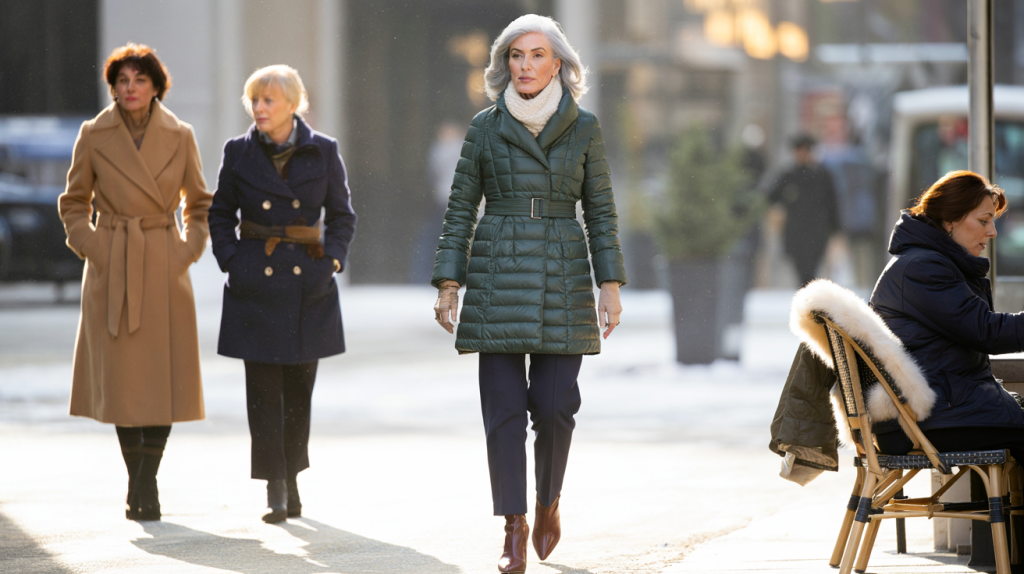
Looking for a winter jacket that feels modern, not try-hard, and warm without the marshmallow effect. The sweet spot exists. This season’s winning silhouettes for women over 50 are clear: a belted puffer with vertical quilting, a long wool wrap coat, a sharp peacoat, a weatherproof parka and a shearling-trimmed aviator for those crisp, bright days.
Why these five. They elongate, structure the shoulder line, and keep insulation where you need it most. Belts define the waist, lapels frame the face, longer hems streamline the body. The result: ease, polish, real protection from the cold, and a look that ages brilliantly instead of dating fast.
Winter Jacket Trends for Women Over 50: What Works Now
The main idea is simple: choose shape over sheer volume. A midweight puffer with a belt or side panels carves a line that reads sleek, not sporty weekend. A long wrap coat in brushed wool signals quiet luxury while covering hips and thighs.
Observation on fit: sleeves that hit the wrist bone, shoulder seams that sit right at the shoulder, and a collar that can stand up in wind change everything. Small tweaks, big mileage.
The common problem that can be solved: fashion-forward jackets often skew cropped or oversized. That can lift hemlines at the back, shorten the torso, and overwhelm curves. A slightly longer cut – mid thigh to knee – balances proportions and pairs with trousers, dresses, or boots without fuss.
Cuts, Fabrics and Warmth: The Science You Feel
Warmth is not guesswork. Down insulation is measured by fill power. According to REI Co-op expert guidance, 600 to 700 offers very good loft for daily cold, and 700 plus is excellent for lighter weight with high warmth (REI Expert Advice, updated 2023).
Clothing insulation is also rated in clo. ASHRAE defines 1 clo as the insulation needed to keep a resting person comfortable at about 21 °C indoors – roughly a business suit level. Add a midlayer and a coat and you push above that benchmark for true winter comfort (ASHRAE Standard 55 reference via Engineering ToolBox).
Fabric choice matters in real weather. Wool regulates temperature and can absorb up to 30 percent of its weight in moisture while still feeling dry, which keeps you warm even when the air is damp (The Woolmark Company).
Many readers care about impact. The United Nations Environment Programme estimates fashion contributes between 8 and 10 percent of global carbon emissions. Choosing durable coats and recycled fills reduces churn and keeps performance high over several winters (UNEP, 2019).
Colors, Details and Styling That Flatter at 50+
Color does the heavy lifting around the face. Camel, navy, winter white, forest green and deep chocolate soften features and mix with everything. Black still works – then add a textured scarf in cream or taupe for light.
Details create the illusion of length. Vertical quilting, two rows of buttons on a peacoat, or a wrap tie placed slightly above the natural waist subtly elongate the leg line. A stand collar protects the neck and looks polished left open on milder days.
A practical example: swap a bulky hooded puffer for a belted quilted coat with a two way zipper. Open the zip from the hem when you sit, close it high when wind bites. Same warmth, far more shape. It realy shows.
Smart Shopping Checklist: Fit, Care, Sustainability
Here is a fast, actionable list to take into the fitting room or your browser.
- Try two sizes: wear your thickest sweater and check shoulder seams, sleeve length and if a blazer fits underneath without strain.
- Down warmth: aim for 600 to 700 fill power for city winter, 700 plus for lighter weight warmth (REI).
- Fabric picks: double faced wool for drape, recycled polyester shell for rain, shearling collar for wind protection.
- Closure check: two way zipper, deep hand pockets, and an interior pocket for phone and glasses.
- Weather test: if you commute, choose a water resistant finish and a hood that cinches without flattening hair.
- Care label: machine washable synthetics save time, wool needs airing and occasional brushing to look new.
- Impact note: prioritize quality that lasts several seasons – fashion accounts for 8 to 10 percent of emissions (UNEP).
Logical next step is to match climate and lifestyle. If winters are wet and windy, a lined parka with a storm flap outperforms pure wool. In dry cold, a 700 plus fill puffer keeps weight down and heat up while tailoring keeps the silhouette clean.
Missing piece many overlook: collar height. A high funnel collar or detachable hood reduces the need for bulky scarves and keeps lines close to the face, which looks sharper on video calls and evenings out.
One last nudge. Try the coat with your real shoes – sneakers, ankle boots, tall boots. The right hem lands two to three hand widths above the boot top and suddenly the whole outfit clicks.
Sources : REI Co-op Expert Advice on down fill power, ASHRAE Standard 55 clo definition via Engineering ToolBox, The Woolmark Company – wool moisture management, United Nations Environment Programme – fashion emissions.