
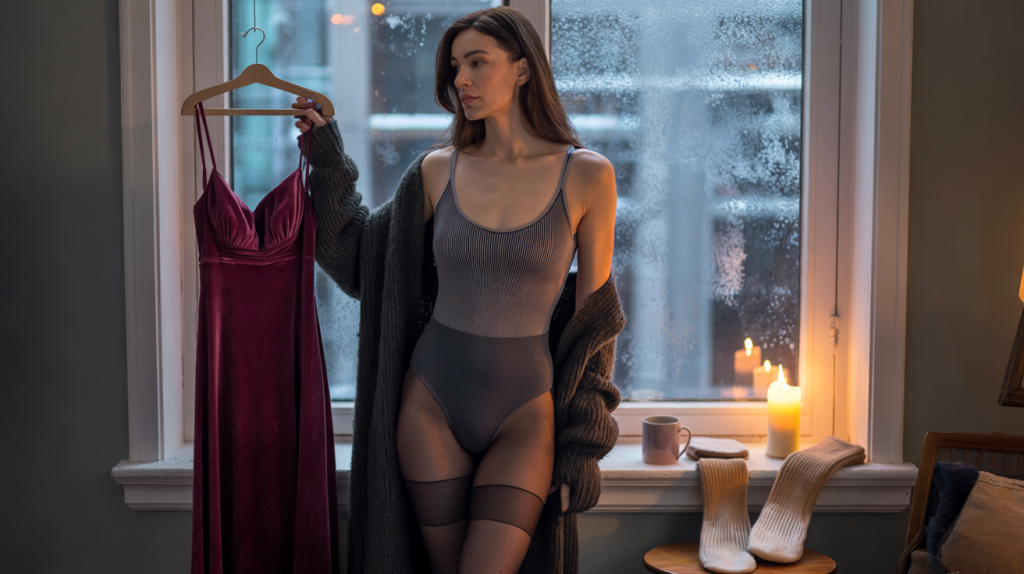
Cold outside, glow inside. Winter lingerie can be sultry and warm at the same time, if materials and cuts do the heavy lifting. Think plush textures, body-hugging silhouettes and layers that trap heat without killing the mood. A long-sleeve bodysuit under a cardigan, a velvet slip with opaque tights, a soft modal bralette paired with high-waisted briefs. Simple moves that feel luxe, look good and actually work when the temperature drops.
The trick sits in fabric science and smart styling. Merino wool handles moisture like a pro, with fibers that can absorb up to 35 percent of their dry weight in vapor before feeling wet, according to The Woolmark Company. Modal brings a silky hand and breathability, tested to be about 50 percent more absorbent than cotton in Lenzing’s data. And tights measured in denier are not just aesthetics. Wolford’s guides place sheer around 20 denier and winter-ready opaqueness near 60 to 100. Even care choices matter. ENERGY STAR notes that water heating accounts for about 90 percent of the energy a clothes washer uses, so cool washes protect both lace and bills.
Sexy lingerie for winter : what actually works in the cold
Heating runs lower, nights run longer. The main idea is simple. Keep skin dry and insulated, then add touchable textures and flattering lines. That is how lingerie stays sexy when rooms feel chilly.
Common winter pain points have a pattern. Cotton traps dampness against the body. Thin bra cups show through knitwear. Lacy sets look stunning yet feel drafty. Solve the problem with a base that manages moisture and a top layer that seals in warmth. Bodysuits, longline bralettes and slips come into play because they cover more surface area without piling on bulk.
The upside appears quickly. Moisture-wicking fibers reduce that mid-evening chill after a walk home. Slight compression smooths under sweaters. Opaque tights or thigh-highs add visual drama and an extra thermal layer, while staying practical outdoors.
Fabrics with heat and touch appeal : silk, modal, merino and velvet
Merino blends deserve a spot in the drawer. The Woolmark Company reports merino absorbs moisture vapor up to 35 percent of its dry weight before feeling wet, helping skin feel drier in fluctuating indoor heat. That is comfort without the bulk of thermal underwear.
Modal from Lenzing brings a cool-to-warm hand feel and drape. Lenzing states its Modal fibers are about 50 percent more absorbent than cotton, which helps manage humidity close to the body and keeps lace trims from feeling clammy. Useful under wool knits and coats.
Velvet and velour read instantly festive and add surface texture that looks rich under candlelight. Silk remains the classic for slips and camisoles thanks to its glide under layers. For those who run cold, look for merino-silk or modal-silk blends. Labels that mention OEKO-TEX Standard 100, launched in 1992, signal testing against a long list of potentially harmful substances, a plus for items worn tight to the skin.
Sources : The Woolmark Company ; Lenzing Modal ; OEKO-TEX Standard 100.
Cuts that flatter under sweaters : bodysuits, longline bralettes and tights
Bodysuits provide full-torso coverage and a smooth line under knit dresses or jeans. Choose softer cups or spacer foam for shape that does not fight your jumper. Longline bralettes anchor underbands lower on the ribcage, spreading pressure and giving a vintage silhouette that feels secure.
Bottoms with a higher rise keep the lower abdomen warm and visually lengthen the leg opening. If garters are on the menu, pair with opaque stockings for winter practicality. Denier matters. As Wolford’s hosiery education explains, around 20 denier is very sheer, 60 and up reads opaque and traps more heat, which suits December nights.
Seam placement counts under fine knits. Look for bonded edges at the neckline and thong lines to avoid imprints. A small elastane content in the 8 to 12 percent range often balances stretch and recovery for a snug fit that still breathes.
Quick capsule checklist for cold season confidence :
- One long-sleeve jersey or merino-blend bodysuit for everyday layering
- A velvet or silk-modal slip that doubles as nightwear and party base
- A longline bralette with soft cups for knitwear days
- High-waisted briefs with bonded edges for invisible warmth
- Opaque tights at 60 to 100 denier, plus one pair of cashmere-blend socks
- A lace set reserved for indoors, layered over a thin modal cami when needed
Care, budgets and sustainability : make pieces last through winter
Washing smart helps the shelf life. ENERGY STAR highlights that about 90 percent of a washer’s energy goes to heating water, so cool cycles and gentle detergents protect fibers and reduce costs. Air-dry flat to keep elastane from relaxing, and rotate sets to give elastic time to recover between wears.
Labels provide clues beyond size. OEKO-TEX Standard 100, in use since 1992, signals independent testing for many chemical residues. Natural-fiber blends often age better than pure synthetics in high-friction areas, which pays off over a full season of wear. Seasonal sales in November and early December bring premium fabrics within reach, then size availability narrows fast. A quick audit of fit and color under real outfits avoids returns and that nagging drawer clutter.
The missing link for many wardrobes is heat-aware layering that still feels intimate. Start with merino or modal close to skin, add the velvet or lace that sparks joy, then seal warmth with tights and socks in the right denier and fiber mix. The look reads intentional, cosy and yes, a little daring. A favorit winter ritual, not a compromise.
Sources : ENERGY STAR ; Wolford denier guide.