
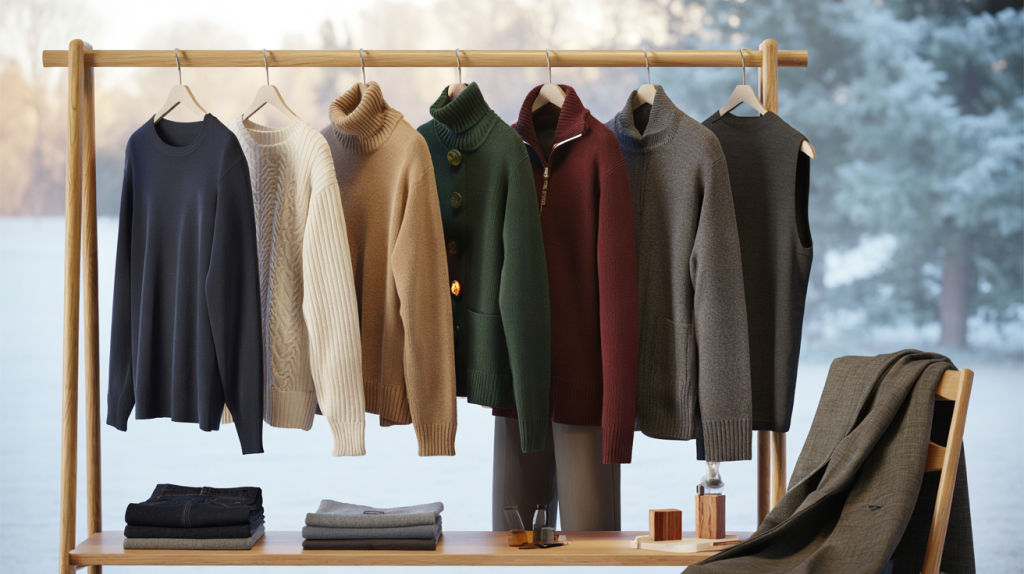
Build a warm, stylish winter wardrobe with seven hard-working sweaters. Smart fabrics, easy layers, care tips and prices that make sense over time.
Basic sweaters to anchor a winter wardrobe
Cold days demand a plan. A tight edit of basic sweaters covers commutes, last‑minute dinners and lazy Sundays without fuss, while keeping style consistent and warm.
The formula lands quick : pick versatile cuts, trust proven fabrics, layer with intention. From crewneck to turtleneck, these classics mix with jeans, tailoring or skirts and stretch a small budget further across the whole season.
Here is the concise capsule that works in real life:
- Fine merino crewneck – the everyday base for shirts, tees and blazers
- Chunky fisherman knit – texture and warmth for freezing snaps
- Cashmere turtleneck – soft insulation that looks polished
- Cardigan with real buttons – quick on‑off and temperature control
- Half‑zip or quarter‑zip – sporty layer that cleans up nicely
- Cotton or cotton‑blend sweatshirt knit – weekend comfort without bulk
- Sleeveless sweater vest – core warmth that does not swamp sleeves
Fabrics that actually perform in winter
Fabric choice changes everything. Merino wool regulates heat, resists odour and handles office to outside swings far better than synthetics. Industry guidance reports that Merino can absorb up to around 35 percent of its dry weight in moisture without feeling wet, which explains the comfort on hectic days. Source : The Woolmark Company.
Cashmere focuses on softness and light insulation. The Good Cashmere Standard defines high‑quality cashmere in the fine range under roughly 19 microns, a detail that translates to that cloud‑like handfeel. Source : The Good Cashmere Standard by Aid by Trade Foundation, 2020.
Context matters for impact too. Wool across all types represents close to 1 percent of global fiber production, which is why blends dominate mainstream racks. Source : Textile Exchange, Material Change Insights 2023. Blends can be practical, yet a higher natural‑fiber content usually improves breathability and comfort.
Layering, sizing and the mistakes that keep outfits stuck
Most winter outfit problems start with thickness and fit. A fine merino crewneck should slide under a jacket without pulling at the shoulders. A fisherman knit needs room at the armhole so sleeves do not bunch. Simple, but often missed.
Another common slip : one sweater does every job. It rarely does. Keep at least one thin base, one mid‑gauge, one chunky piece, and rotate by weather and dress code. That mix keeps silhouettes balanced and avoids the overstuffed coat problem.
Care also affects shape. Knitwear stretches when hung wet. Dry flat on a towel, reshape, and store folded. Energy experts note that washing at 30 °C cuts energy use significantly compared with higher settings, a small change that protects fibers and bills at once. Source : Energy Saving Trust, 2023.
Price, longevity and the simple care loop
The quiet math favors basics. A mid‑priced merino worn twice a week from November to March clocks roughly 40 wears in one season. Two seasons in, cost per wear often undercuts the impulse trendy knit that leaves the closet after three outings.
Still, durability is earned. Rotate knits to rest the fibers. Use a cedar block or zip pouch against moths. A fabric shaver removes pills fast without scraping the surface. Small steps, big returns.
For sizing, try the turtleneck one size down from a chunky crew so collars sit clean inside coats. For the half‑zip, look for a sturdy zipper tape and a collar that stands without collapsing. Minor details, yet they shape that tailered look that reads effortless.
When gaps appear, think function first : if commutes feel icy, add a vest for core warmth; if office heating runs hot, swap the chunky knit for a fine merino and carry a compact scarf. The capsule stays small, the range widens, and layering becomes instinct rather than work.