
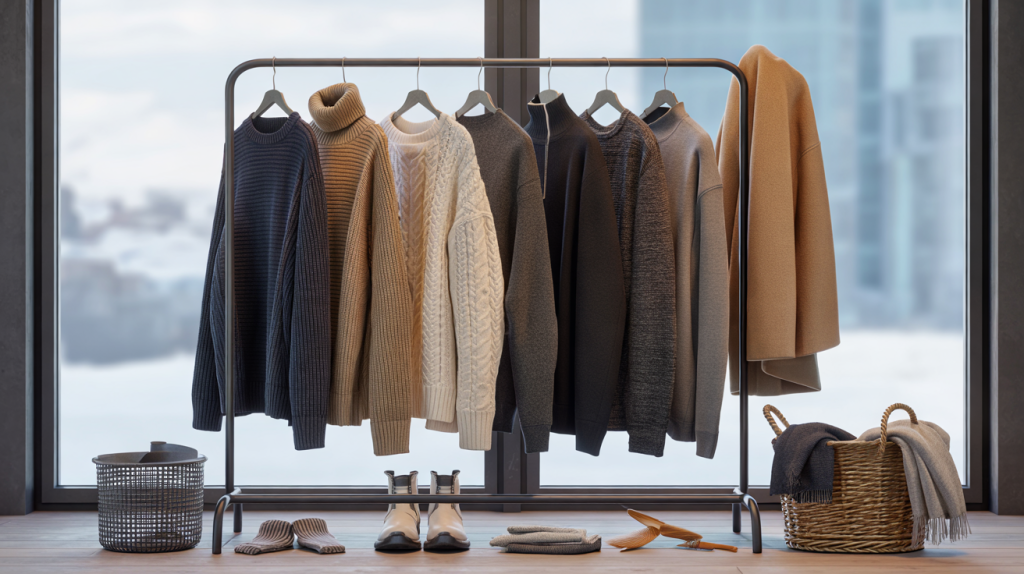
Cold mornings hit, the radiator hums, and the same question pops up: which sweaters carry an outfit, keep warmth in, and still look sharp by spring. The answer lives in a tight edit of basics that layer cleanly, resist wear, and match almost anything.
Here’s the core: a few well-cut knits in the right fibers solve most winter days. Think crewnecks and turtlenecks for heat, a cardigan for flexibility, and a heavier knit for real cold. Choose smart now and the rest of the season gets easier, cheaper, calmer.
Winter wardrobe basics : the essential sweaters that do the work
A good winter lineup starts with purpose: heat, layering, and polish. Each piece should earn space, not just add bulk. One sweater per scenario beats a crowded closet that never quite fits right.
Mix weights and necklines to cover commute, office, and weekend errands. Keep colors grounded: grey, navy, black, camel, cream. A single seasonal accent is enough.
Below, a compact list that covers 95% of daily needs without guesswork.
- Merino crewneck : breathable, office-ready, layers under blazers or coats.
- Turtleneck : wind-blocking neckline, sleek under a topcoat or puffer.
- Chunky fisherman or cable knit : real warmth for freezing days, adds texture.
- Cardigan (fine gauge) : easy on-off for temperature swings, sharp with shirts.
- Half-zip or mock neck : sport-leaning mid layer that still looks refined.
- Cotton or cotton-cashmere sweatshirt knit : casual, holds shape, good for indoors.
- Cashmere crew or v-neck : softer hand, dress-friendly, light yet warm.
Fabrics that warm well : wool, cashmere, cotton, and blends
Fiber choice sets warmth, breathability, and how often a sweater needs washing. Merino wool regulates temperature and stays comfortable across commutes and overheated rooms. Cashmere brings a lofty feel at lighter weights. Cotton knits run cooler and shine indoors.
Synthetics add stretch and durability, yet they shed microfibers when washed. The International Union for Conservation of Nature estimated in 2017 that 35% of primary microplastics in the ocean comes from synthetic textiles. Choosing natural fibers or low-shed blends helps, and washing less cuts impact too.
Care habits matter as much as labels. ENERGY STAR notes that heating water accounts for around 90% of the energy a clothes washer uses. Cold cycles and air-drying keep knits in shape while shrinking energy use. Gentle wash bags reduce abrasion on fine gauges.
Fit, layering and care : how to make sweaters last
Fit first. Sleeves should hit at the wrist bone, shoulder seams sit square, and the hem cover the waistband without bunching. Too long, and layers look sloppy. Too tight, and yarns strain.
Layering works when thickness steps up: base layer, mid-weight knit, coat. A merino crew under a blazer reads clean, while a turtleneck under a wool overcoat locks in heat for windier days. Keep collars and cuffs flat to avoid bulk.
Longevity is not just luck. WRAP in the UK reported that extending the active life of clothing by nine months can reduce carbon, water, and waste footprints by around 20 to 30%. Spot-clean between wears. Fold knits instead of hanging to avoid stretch. Shave pills with a fabric comb, not scissors. These small steps turn a favouite knit into a multi-season regular.
Smart shopping : price, timing, and quality signals
Look closely at gauge and handfeel. Tighter knits resist pilling. On wool and cashmere, scan high-friction zones like underarms for fuzz before buying. For cardigans, check button stitching and placket stability. Zippers on half-zips should glide clean.
Labels help cut guesswork. Merino and lambswool bring warmth without heft. Cashmere blends balance cost and softness. For cotton, aim for mid-to-heavy weights in winter, with a smooth, dense knit that rebounds after a light stretch.
Timing saves money. Late January and February markdowns often hit 30 to 60% as retailers clear stock to make room for spring deliveries. One high-quality sweater bought on sale beats two that sag by March. A tight color plan also keeps impulse buys in check.
Last piece of the puzzle : build around outfits you already wear. If a charcoal coat anchors most weekdays, a camel turtleneck and a navy crew add contrast and warmth without clashing. Rotate weights through the week to rest fibers. That simple rhythm turns a small edit into an indispensible winter system.