
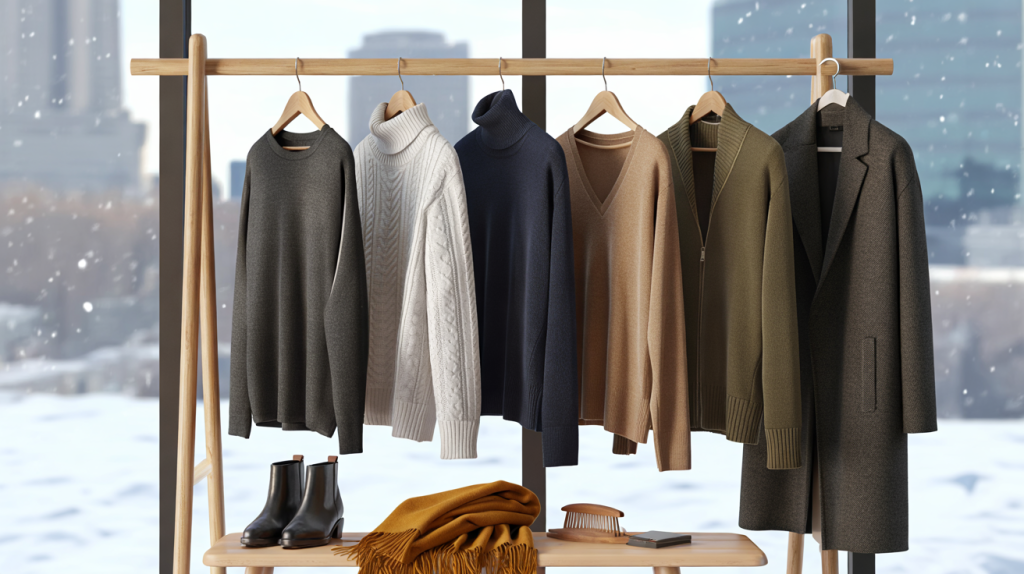
Temperatures drop, mornings bite and dressing becomes a daily puzzle. The quick win sits on top of the drawer : a small rotation of must have winter sweaters that handles work, weekends and those long commutes without fuss. Clicked for the essentials Here they are, clearly laid out so the next sweater is your best one yet.
Shoppers want warmth without itch, polish without dry cleaning drama and pieces that play well with coats. The right knit does all of that. Merino regulates heat on the move, cashmere dresses up a meeting, a fisherman knit feels like a blanket at a café table. Below, the exact types that cover real life, the fabrics that actually insulate, and the care steps that keep pills away.
The must have winter sweaters for everyday warmth and style
Start with a tight edit. A micro wardrobe of five covers most winter scenarios and stops the morning scroll.
- Merino crew neck : the do it all base that breathes on the subway and warms at the desk.
- Chunky fisherman knit : classic cables, real texture, instant cozy for jeans and boots.
- Turtleneck in fine gauge : sleek under a blazer, extra neck coverage outdoors.
- Cashmere V neck : soft drape for smarter looks, silky over a shirt or a slip dress.
- Zip or button cardigan : quick to shed indoors, ideal for layering on changeable days.
Fabrics that actually perform in the cold
Not all knits trap heat the same way. Fiber choice decides if a sweater hugs warmth or turns clammy. The Woolmark Company notes in 2023 that merino wool can absorb up to 30 percent of its weight in moisture while still feeling dry. That means fewer chills after a brisk walk. Fine merino also trims itch compared with coarser wool.
Cashmere brings lightness and softness. The category keeps growing, yet budgets vary widely. For value, blends with 10 to 30 percent cashmere soften the hand while keeping price sensible. When softness meets structure, alpaca blends add loft with less weight. Pure cotton feels familiar and easy, though it insulates less in damp cold and suits heated offices better.
Synthetics deliver stretch and lower cost, but there is a trade off that many now consider. The International Union for Conservation of Nature reported in 2017 that washing synthetic textiles accounts for 35 percent of primary microplastics released into the oceans. If choosing acrylic or polyester, look for recycled content and wash in a microfilter bag to reduce shedding.
Fit, layering and real life use
Winter wardrobes work when pieces layer without bulk. A fine gauge merino crew sits close to the body and slides under a coat smoothly. Then the chunky knit comes out for off duty heat. Two weights, endless combos.
Necklines matter. Crew necks flatter most faces and frame necklaces cleanly. V necks open space for collars and reduce heat at the throat indoors. Turtlenecks add protection on windy days and remove the need for a scarf in a hurry. Color does the rest. A dark neutral like charcoal or navy acts as a base, then one richer tone lifts the week. Think pine green, russet, winter white.
Budget feels tight for many. That is why resale became a real option, not a niche. The thredUP 2023 Resale Report projected the United States secondhand market to reach 70 billion dollars by 2027, growing three times faster than overall apparel retail. Quality knits circulate there with far lower cost per wear. Good timing January and February see an influx of returns and end of season stock.
Care, sustainability and smarter choices backed by data
Good sweaters last when washing slows down. Air between wears and brush with a cashmere comb instead of frequent machine cycles. Woolmark guidance in 2022 recommends hand washing in lukewarm water with wool detergent, then drying flat to keep shape. That single move prevents stretching and extends life noticeably.
Closet churn has a climate cost. The Ellen MacArthur Foundation reported in 2017 that global clothing production roughly doubled between 2000 and 2015 while average garment use before disposal fell by an estimated 36 percent. A tighter sweater edit cuts that waste. Buy the right weight once, rotate, mend elbows early, depill gently. Small habits, big mileage.
Transparency helps. Look for certifications that speak clearly about fiber and dye safety, like OEKO TEX Standard 100 for harmful substances, the Responsible Wool Standard for animal welfare, or Good Cashmere Standard for traceability. Labels are not the whole story, yet they guide better picks when time is short. One last tip that sounds simple and works : try on with the coat you actually wear most. Sleeve width, armhole height and collar height all change comfort in the real world. The perfect sweater that bunches under a parka ends up worn less, and that is definitly a waste.
In case the search was in French and brought you here, “pulls indispensables hiver” translates to the same mission. A compact set of essentials, built on merino, one chunky knit, one refined cashmere, a turtleneck and a flexible cardigan. Pick fabrics with intent, lean on data where it matters and the season gets easier from Monday to Sunday.