
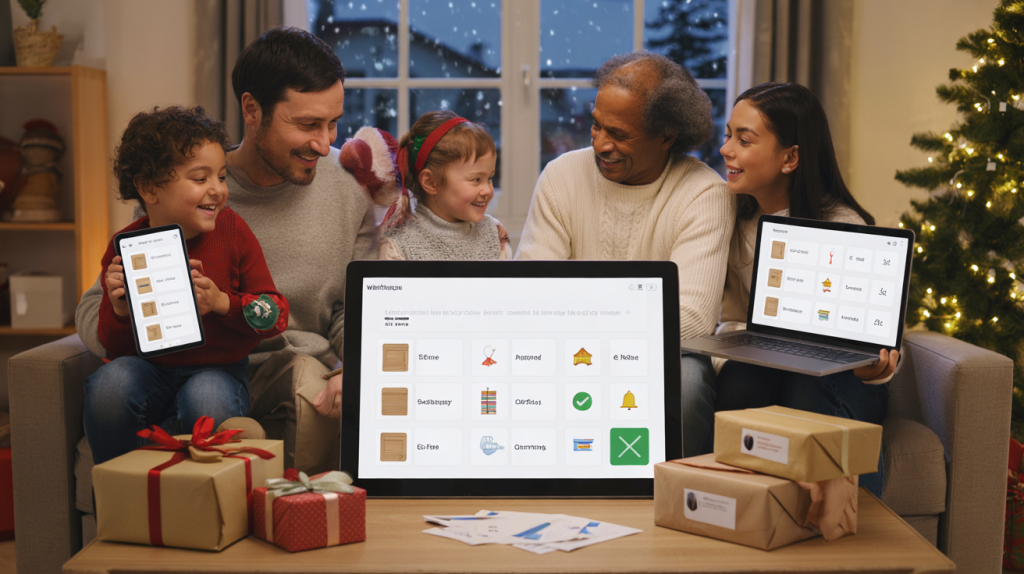
Holiday crunch hits fast. Carts fill, budgets wobble, and the fear of gifting the wrong thing creeps in. That is where wishlist mode Noël comes in: a practical, shareable way to lock the right presents early, control spend, and skip the January regret.
The idea is simple and timely. Families and friends build living wishlists, agree on budgets, and share real links. Fewer unwanted gifts, fewer returns, less waste. The upside shows up on the calendar and in the bin, not just the wallet.
What “wishlist mode Noël” really means today
At heart, it is a switch in behavior. Gift ideas stop living in scattered chats and start living in one place. The list is visible, sortable, and updated as stock, sizes, and prices change.
Observation from every December: surprises are nice until the size is off or the brand is wrong. A transparent wishlist protects the thrill of gifting while keeping choice in the recipient’s hands. That is the balance people are trying to hit.
The problem to solve sounds small but snowballs. Unclear budgets, duplicate purchases, and last‑minute shipping get expensive. A list with priorities, notes, and price ranges trims that chaos before it occured.
Common traps to avoid : mistakes that derail Christmas lists
Too many lists across too many apps. One person builds on Amazon, another on Pinterest, a third in Notes. Pick one home base and link out as needed.
No price boundaries. Without a range per person, guilt or overspending creeps in. A simple ceiling keeps the group aligned and relaxed.
Secret lists with no sizes or deadlines. A wishlist without sizes, colors, or last delivery dates does not help shoppers. Add the practical details people need to click buy with confidence.
Silent updates. If an item is purchased, it should auto‑reserve or be marked taken. Shared lists that allow claim markers prevent duplicates and awkward returns.
Proof it works : numbers on waste, returns, and what people actually want
The National Retail Federation wrote in January 2024 : “Holiday sales in 2023 grew 3.8 percent to $964.4 billion.” Source : National Retail Federation, Jan. 2024.
Returns drain time and margin when lists are guesswork. NRF and Appriss Retail reported in December 2023 : “Consumers returned $743 billion in merchandise in 2023, a 14.5 percent return rate.” Source : Appriss Retail and NRF, 2023 Consumer Returns in the Retail Industry.
Waste also spikes when gifts miss the mark. The U.S. Environmental Protection Agency states : “Household waste increases by more than 25 percent between Thanksgiving and New Year’s Day.” Source : U.S. EPA, Holiday Waste.
What do people want most if asked directly? NRF said in October 2023 : “Gift cards remain the most requested gift for the 17th year in a row, cited by 55 percent of consumers.” Source : NRF 2023 Holiday Consumer Survey.
Action plan : set up a wishlist that people actually use
Here is a simple, mobile‑first setup that keeps joy and cuts friction.
- Choose one hub : a shared Amazon List, an Apple Notes folder, a Google Doc, or a private Pinterest board. One link per person.
- Add the essentials : sizes, colors, model numbers, links, and a price range per item. Add one or two “surprise” ideas at the end.
- Turn on reservations : use claim or purchased markers so gifts are not duplicated. If the app lacks this, assign a coordinator.
- Set budgets by circle : immediate family, extended family, colleagues. Write the ceiling in the top line to reduce stress.
- Build timing into the list : note last‑order dates for standard and economy shipping. Add a cutoff for handmade or small‑shop gifts.
- Track prices simply : paste exact product links so price alerts in your browser extension can fire. Keepa, Honey, and shop alerts work well.
- Be privacy smart : keep addresses and phone numbers off public lists. Share links only inside your chat groups.
- Refresh weekly : remove out‑of‑stock items, mark what is taken, and move anything that feels forced into a “nice to have” section.
A quick example helps. A family of five picks one shared folder, writes a per‑person budget at the top, places five to eight items each with sizes and links, and tags two priority picks. Siblings claim items, one grandparent buys the big piece, and gift cards cover the remaining ideas that did not restock.
The missing piece for many is timing. Start the lists before mid‑November for stock, then lock most purchases by early December for lower shipping costs. Price swings soften when demand rises, and clarity is the quiet engine of a calm Noël.