
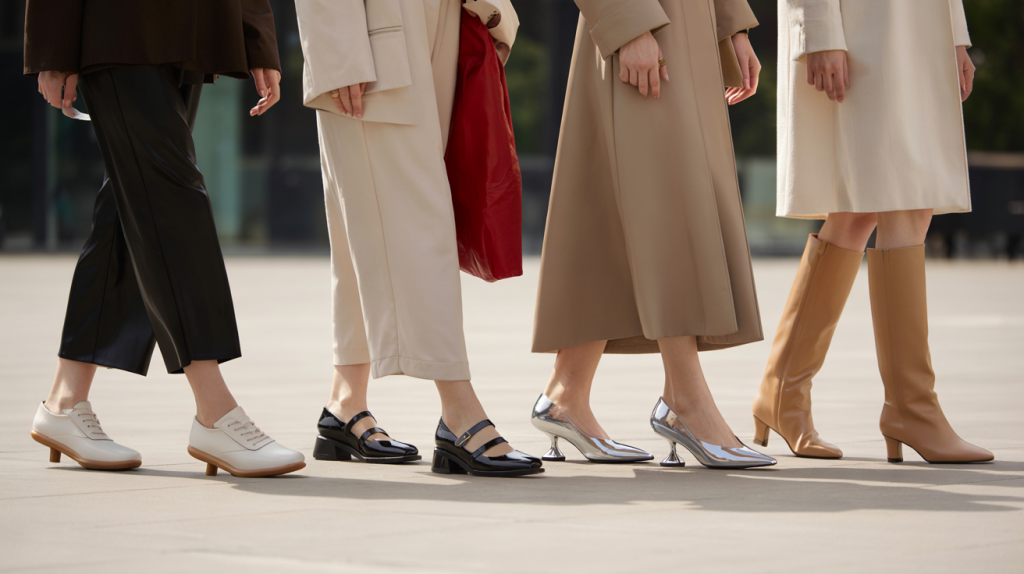
Clicks well spent. Women’s shoes in 2026 pivot around three anchors that already shape the market today: comfort that looks polished, statement details that stay wearable, and materials that feel lighter on the planet. The direction is clear from the first step, with cushioned sneakers, sleek Mary Janes and sculptural heels building a wardrobe that moves fast without punishing the feet.
The context backs the mood. The global footwear segment generated about 412.9 billion dollars in 2024 and is projected to reach roughly 470 billion dollars by 2028, a compound annual growth of 3.35 percent according to Statista 2024 (source: Statista). Consumers kept chasing easy to style icons, and the Adidas Samba ranked among the hottest products in the Lyst Index Q2 2023, a sign that low profile, retro sneakers were not a fad but a base layer for outfits that mix tailoring and sport codes (source: Lyst Index Q2 2023).
2026 women’s shoes forecast: what changes and what stays
The idea is simple. 2026 keeps the comfort revolution but dials up elegance. Sneakers lean slimmer with leather uppers, micro platforms and clean palettes. Heels go architectural without going skyscraper high, thanks to flared kitten bases and balanced block shapes. Ballet flats gain structure through square toes and subtle straps, so they read dressy, not dainty.
Color plays smarter. Red continues as a confident accent, metallic finishes stay bright for night and daylight, and soft neutrals carry the quiet luxury vibe into everyday dressing. Materials evolve toward bio based and recycled blends, from plant based leathers to cushioned soles using sugarcane or algae derived foams, as more brands scale alternatives already seen in limited runs in 2023 and 2024.
Why comfort leads the pack, with data to prove staying power
The comfort first shift did not happen overnight. The State of Fashion 2024 by McKinsey and The Business of Fashion highlighted casualization as a structural consumer behavior and projected global fashion sales growth of 2 to 4 percent in 2024, favoring categories that deliver ease and versatility (source: McKinsey). In footwear, that translated into the rise of heritage sneakers and low heels that can do office and off duty without costume changes.
Resale and repair have pulled in the same direction. The ThredUp 2024 Resale Report projected the US secondhand apparel market to reach 73 billion dollars by 2028, with shoppers valuing durability and timeless styling that can be resold or kept longer (source: ThredUp). That favors sturdy loafers, leather sneakers that age well, and boots with replaceable soles.
One more signal from the culture calendar. When a product like the Samba tops a quarterly heat index in 2023 and continues to show up on runways and street style after, it sets a template for 2026: lean profiles, vintage echoes, and elevated materials that sit confidently next to tailoring.
The styles to watch now for a 2026 ready wardrobe
Mary Janes with a modern twist. Single or double straps, slightly squared toes, low and stable heels. They read smart with trousers and soften sharp suiting.
Next gen sneakers. Think leather or knit uppers, tonal laces, subtle platforms that add one or two centimeters without the clunky feel. Minimal logo, maximum polish.
Sculptural heels for real life. Flared kitten heels, curved mid heels, geometric blocks that look artistic yet walkable. Paired with midi skirts or long trousers, they lengthen the line and keep pace.
Soft shaft knee boots. Supple leather, almond toes, and slim columns that slide under wider trousers or balance short hemlines. A winter backbone piece that carries into spring with light dresses.
How to shop 2026 trends without buyer’s remorse
Trends land better with a plan. Start with what already works and build around it, not against it. Shoes that can cross work, weekends and events will earn their keep and resell well if needed.
Small choices make a big difference over time. Look for stitched rather than glued soles when possible, removable insoles for easy refreshing, and uppers that can handle a polish. Materials matter, but construction is the long game.
To make selection easier, filter by use case first, trend second. Here is a compact checklist that keeps focus while browsing online or in store.
- Pick one trend anchor per season, like a sculptural mid heel or a modern Mary Jane, then build outfits around it.
- Choose a wear count target before checkout. If it cannot hit 30 wears within a year, skip or swap color.
- Prioritize neutral or metallic finishes for cross season mileage, then add a single pop shade such as red.
- Check care options in advance. If the brand lists spare parts or resoling partners, that is a green flag.
Price spikes can raise questions. The good news is that seasonal outlets and reputable resale platforms often list premium sneakers or boots at 20 to 40 percent below retail within months, which aligns with the resale growth tracked by ThredUp in 2024. Timing and alerts help catch the right pair when it finally drops.
What about sustainability claims. Third party certifications and transparent material disclosures beat vague promises. If a brand names the percentage of recycled content, the specific plant based input, and the factory location, decision making becomes clearer. When information is thin, customer reviews focused on comfort and durability fill gaps fast.
The last piece that unlocks everything is fit. In 2026, brands continue to expand half sizes and width options as comfort remains a selling point. Try late afternoon when feet are slightly larger, compare size charts across regions, and keep one set of gel inserts ready for fine tuning. That tiny tweak often turns a good shoe into a great one, and helps it recieve more wear than trends alone ever could.