
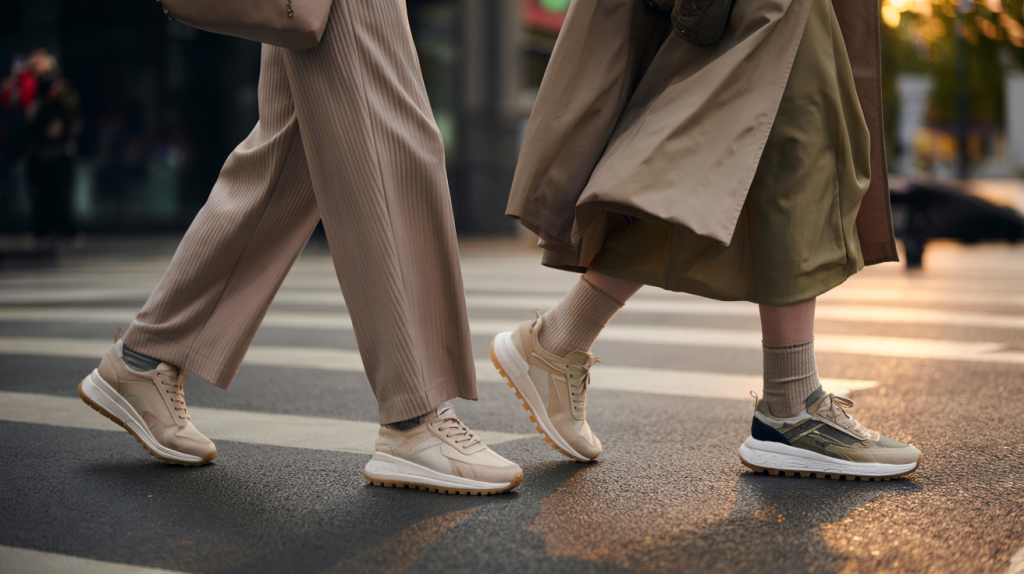
Clicks well spent. The 2025 wave in women’s sneakers blends three forces everyone can feel on the street right now: retro terrace icons returning to everyday wardrobes, plush cloud-like cushioning from performance brands stepping into lifestyle, and sustainability shifting from slogan to standard across price points.
Why this shift lands now is not guesswork. The United Nations Environment Programme attributes 8 to 10 percent of global carbon emissions to the wider fashion industry, and an MIT-led analysis found a typical running shoe carries roughly 14 kilograms of CO2 equivalent. Add the European Union’s Corporate Sustainability Reporting Directive that begins binding disclosures for many large groups from 2025 based on 2024 data, and a market signal from Cowen projecting the global sneaker resale category could hit 30 billion dollars by 2030. Materials, durability and traceability stop being niche features, they drive choice.
Women’s sneaker trends 2025: what stands out and why it sells
Street observation first, shop floors confirm it. Slim retro court and terrace styles anchor wardrobes again, styled with tailored trousers and long skirts rather than only denim. At the same time, maximal cushioning from performance-lifestyle crossovers wins for commuters and long days on foot. Color blocking softens, neutrals lead with quiet highlights, then metallic accents or jelly details pop for evening.
The common friction point has been comfort that looks polished enough for the office and date nights. That gap narrows in 2025 through sleeker lasts on classics and lighter foams hidden inside casual silhouettes. The result, sneakers that pass dress codes without losing the easy stride.
Price sensitivity also plays a role. With resale liquidity expanding, shoppers trade into icons or limited colorways that retain value instead of cycling through fast-fashion drops. That keeps closets tighter, and frankly, outfits sharper.
Sustainable sneakers 2025: materials, circularity and the new proof
Data pushes change. The MIT footprint figure gives context to why brands cut impact at the materials stage, shifting uppers toward recycled polyester, bio-based synthetics and responsibly sourced leathers. Brands now publish supplier lists and chemistry standards as CSRD reporting arrives, which moves sustainability claims from glossy to verifiable.
Microfibers stay on the radar too. The International Union for Conservation of Nature estimated in 2017 that synthetic textiles account for a significant share of primary microplastics released into oceans. That is one reason knit constructions evolve with tighter yarn systems, and why many new models use abrasion-resistant overlays to reduce shedding across the shoe’s life.
Circular behavior rises alongside. Cowen’s resale projection places a premium on repairable builds, replaceable insoles and outsoles, plus authenticated take-back. Limited drops are no longer just hype, they are inventory for second lives.
Retro terrace style in 2025: slim lines, gum soles, smarter neutrals
Minimalist court sneakers and terrace silhouettes, think low profiles, gum or off-white soles, lean into premium suede and full-grain leather. They pair cleanly with wide-leg tailoring and silk skirts, changing the mood without shouting. The color pallete tilts to ecru, stone, olive and ink, then flips into a single metallic accent for night.
The risk with retro is looking costume. The 2025 fix is proportion: slightly higher rise trousers and longer hemlines balance slim sneakers. Socks matter too, ribbed organic cotton in tone, not stark white, keeps the line uninterrupted.
A quick note on care. Suede protectors with water-based formulas help longevity and preserve resale value, while cedar shoe trees reduce creasing for leather pairs. Small steps, real payoff.
Cloud comfort and performance-lifestyle crossovers: daily miles, lighter looks
Max-cushion running DNA moves into everyday designs. Stack heights stay generous yet shed visual bulk with bevelled midsoles and sculpted sidewalls. Slip-on entries and speed laces appear in lifestyle colors, helpful for travel and school runs, and yes, they still feel secure.
The city-to-trail idea keeps growing. Lugged, low-weight outsoles grip wet pavements without reading hiking, and water-resistant membranes protect commutes. Wide-fit and inclusive sizing expand in 2025 lines, a long requested update that finally lands in mainstream releases.
Comfort should never cancel style. Try mixing one high-cushion pair with structured outerwear, a trench or blazer, to counter the volume. If in doubt, ground it with textured socks in a matching tone to slim the silhouette.
Shopping smart in 2025 comes down to three moves seen across the market and the data above.
- Choose one retro icon in premium materials, one cloud-cushion daily pair, and one weather-ready hybrid, then rotate to extend life and resale potential.
One last layer makes the picture complete, transparency. Look for product pages with material percentages, factory locations and repair or take-back options. With fashion’s emissions profile documented by UNEP, the footwear footprint quantified by MIT, and regulatory reporting stepping in across the EU, brands now have to show their homework. That is good news for style and for the planet, and it is exactly where women’s sneakers are headed in 2025.