
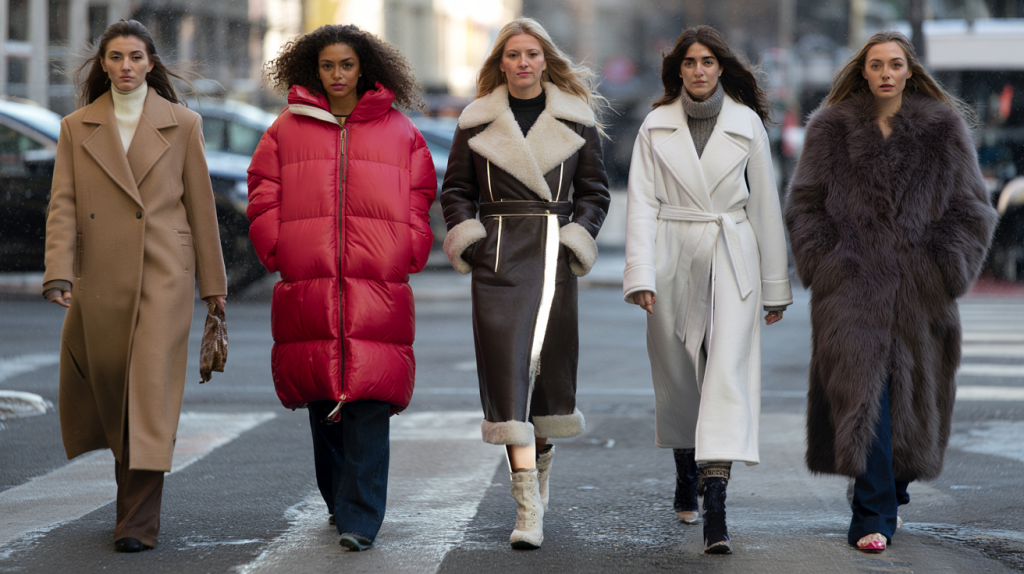
One great coat carries a season. This winter, five silhouettes lead the pack in city streets and search tabs : long tailored coats, cocoon puffers, shearling aviators, belted robe coats, and plush faux fur. Colors calm down to camel, charcoal and chocolate, with a sharp pop of red and clean winter whites.
Weather is swinging. The Copernicus Climate Change Service confirmed in January 2024 that 2023 was the hottest year on record, at 1.48°C above the 1850-1900 average. Wardrobes adapt with lighter-yet-warm layers, technical fills, and more versatile lengths that handle both mild days and sudden cold snaps. At the same time, materials shift : Textile Exchange’s 2023 report notes recycled polyester reached 14.8% of global polyester production in 2022, while resale reshapes buying habits as ThredUp’s 2024 Resale Report projects the US secondhand apparel market to hit 73 billion dollars by 2028.
Women’s winter coat trends : the silhouettes and shades winning now
Long and lean coats set the tone. Think ankle-skimming wool with a sharp lapel, or a single-breasted column in soft camel. They pair with sneakers today and heeled boots at night, no fuss.
Puffers evolve. The best versions feel lighter with matte shells, oversized baffles, and a soft cocoon profile. Mid-calf lengths keep legs warm on platforms or flats.
Shearling aviators are back in rotation. Cropped, sturdy, slightly boxy. Faux shearling trims broaden the price range, while darker leather finishes freshen the classic.
Belted robe coats deliver that wrap-and-go ease. A sash highlights the waist over chunky knitwear, and double-faced wool avoids bulk. Quiet luxury on a cold morning.
Color plays it cool. Camel, chocolate and charcoal stay timeless. Winter whites brighten grey skies. Red, sparked by runway and street looks through 2023, punctuates scarves, lapels, even full-length coats for the bold.
Tendance manteau femme hiver : fabrics, insulation and real warmth
Fabric matters more than any trend name. A wool or wool-blend outer keeps wind off, while a quality lining helps layers slide and traps air for warmth. Look for at least a majority wool content for tailored styles.
Down and synthetic fills trade benefits. Down offers high warmth-to-weight and compressibility. Fill power numbers signal loft : 600 is solid for city cold, 700 to 800 suits deeper chills. Synthetics insulate when damp and dry faster, useful for commute rain and sleet.
Material shifts are measurable. Textile Exchange identified that 14.8% share of recycled polyester in 2022, largely from recycled bottles, and adoption continues to climb in outerwear. Water-repellent finishes and taped seams add real-life comfort on wet days.
Hardware and details count. Two-way zips help when sitting. Storm flaps block wind at the chest. Deep hand pockets change everything in January. A removable hood saves bag space and adapts to dressier evenings.
Smarter shopping : price, sustainability and the secondhand boom
Budgets meet data. ThredUp’s 2024 Resale Report projects 73 billion dollars in the US secondhand market by 2028, with outerwear among the most resold categories. Translation : quality coats hold value and are easy to rehome if style shifts.
Care equals savings. Dry clean sparingly, steam to revive, brush wool to remove surface dust, and air out after wet days. A small tailor fix on a loose button or lining tear extends years of wear at low cost.
Climate context influences baskets too. With warmer winters recorded in 2023, many choose adaptable midweights and smart layering instead of buying two heavy coats. A versatile long coat plus a weatherproof puffer covers most weeks.
Brand programs help. Look for take-back or repair services, and clear fabric labeling. When in doubt, a classic cut in a durable textile beats trend-chasing. Cost per wear wins that debate every time.
Fit, care and longevity : avoid the easy mistakes
Most coat regrets start with fit. Shoulders too tight stop layering. Sleeves too short expose wrists to wind. Measure a favorite blazer and match those numbers before ordering.
Fabric content is the next trap. A beautiful silhouette in a flimsy blend ages fast. Read the label calmly, even when a sale tag pulls attention away. Then plan the wardrobe around that choice.
For a quick pre-purchase check, this helps in store or online :
- Layer test : try with a chunky sweater, zip and move your arms without strain.
- Length logic : mid-calf for bitter cold, knee length for commute agility, cropped for drivers.
- Pocket depth : hands fully inside, phone secure, no sharp zipper edges.
- Warmth notes : down fill power listed, or synthetic weight in grams, plus a proper lining.
- Weather shield : water-repellent finish named, hood detachable, collar that stands up.
- Care plan : can it be steamed at home, buttons anchored, spare buttons included.
Trends are clear, yet choice stays personal. City walkers often pick a cocoon puffer for early mornings, then a long tailored coat for meetings. Night plans invite faux fur. One coat can do a lot, two coats cover everything. And if a vintage gem appears, that is definetly worth a second look.
Numbers also calm the impulse. Copernicus dated the heat records in 2023, and that nudges fabrics toward lighter insulations with strong weather protection. Textile Exchange tracked the rise of recycled fibers. ThredUp mapped resale’s growth. Taken together, the best move right now is simple : buy the silhouette that fits your winter life, in a fabric built to last, with room for a knit today and the season after.