
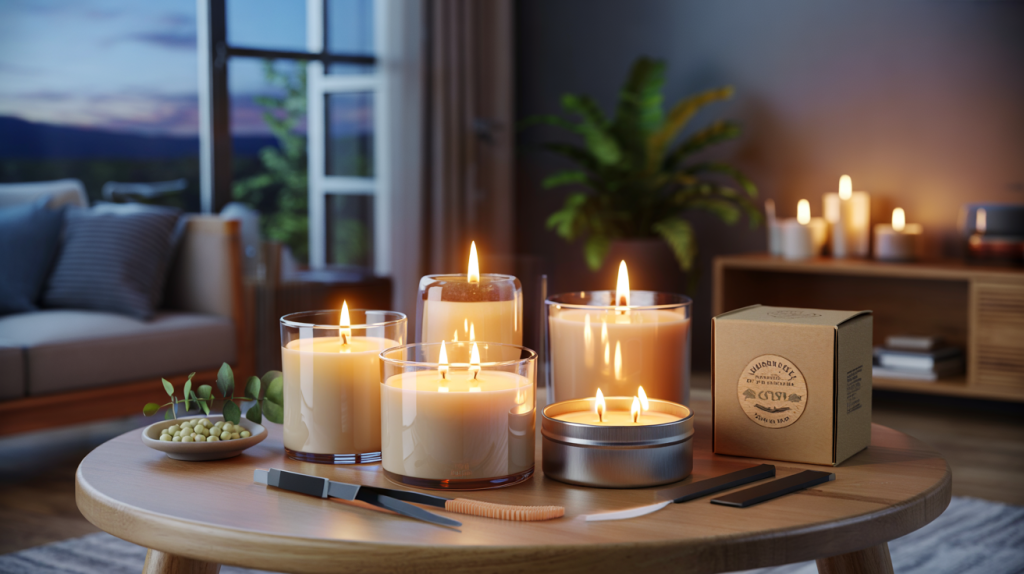
Fragrance sets the mood, yet nobody wants a smoky living room. That is why eco-friendly soy wax candles keep trending: plant-based wax, a softer glow, and the promise of a tidier burn than old-school petroleum paraffin. The catch is real though. Performance depends on the full recipe – wax, wick, fragrance, and jar – not just the label.
Here is the quick picture. Soy wax is made from hydrogenated soybean oil, a renewable crop. Paraffin comes from petroleum refining. Regulators banned lead-core wicks in 2003 in the United States, which changed indoor safety overnight. Since then, the smarter move is choosing well-formulated candles and ventilating rooms – simple habits that make a noticeable difference.
Why eco-friendly soy wax candles appeal right now
Daily life needs calm, not residue. Many shoppers pick soy for two reasons: a plant origin and a reputation for a cooler, steadier burn in containers. The modern candle market is big – and growing. Grand View Research valued it at 12.88 billion dollars in 2023, with a projected compound annual growth rate of 5.7 percent from 2024 to 2030 (Grand View Research, 2024). That momentum reflects a shift to cleaner-feeling home rituals.
There is also a practical angle. Soy wax pairs well with jars and wooden or cotton wicks, which helps reduce visible sooting when the wick is correctly sized and trimmed to about 6 millimeters. Many users report a softer scent throw, good for small rooms or evening routines. Not a miracle, just a nicer experience when the recipe is dialed in.
What science and regulators actually say about candle emissions
Facts first. The U.S. Consumer Product Safety Commission banned lead-core wicks and candles with lead wicks in 2003 – a key date for indoor air safety (CPSC, Federal Register, 2003). That single rule removed the riskiest legacy issue from the market.
On emissions, the U.S. Environmental Protection Agency notes that burning candles and incense can add particulate matter and other pollutants to indoor air. Good ventilation and not burning multiple products at once helps manage that load (EPA, Candles and Incense).
Wax type is only part of the equation. The National Candle Association reports that well-made candles of different waxes can perform similarly for sooting and emissions when formulated and burned properly (NCA, Candle Waxes). Fragrance load, dye, wick construction, and user behavior – like burning in drafts or letting the wick mushroom – usually explain smoky glass or black residue more than the base wax alone.
Sourcing matters : soy, sustainability, and deforestation
Eco-friendly should mean full lifecycle thinking. Most global soy does not become candles at all. Around 80 percent feeds livestock, a driver tied to land conversion in sensitive regions (World Wide Fund for Nature, Soy). By contrast, candle-grade soy wax accounts for a sliver of the crop and is often sourced from the United States, where soybeans are a major rotation plant.
Still, sourcing claims deserve scrutiny. Look for brands that disclose origin by country, describe their supply chain, and avoid paraffin blends if you specifically want plant-only wax. Packaging also counts. A reusable glass jar and minimal plastic can shrink the footprint more than a switch in wax alone – the jar is heavy, shipped far, and dominates waste if not reused.
How to choose a better soy candle without the guesswork
Shopping gets easier with a short checklist. These small steps cut soot, stretch burn time, and reduce waste in one go. And yes, the flame still looks beautiful.
- Wick : cotton or responsibly sourced wood, lead-free by law since 2003 in the U.S.
- Fragrance : IFRA-compliant or essential-oil blends; lighter loads for smaller rooms.
- Jar : thick reusable glass or metal tins; avoid single-use decorative layers.
- Wax disclosure : “100 percent soy” if you want plant-only – blends burn differently.
- Label candor : burn time estimate, trimming guidance, and safety pictograms.
- Use : trim to 6 mm, burn 2-3 hours to set a full melt pool, then let the jar cool.
One note on claims. You will see promises of 30 to 50 percent longer burn for soy. Performance varies by wick size, vessel diameter, and fragrance load. The easiest way to win hours back is basic care: correct wick length and keeping candles away from drafts so they do not tunnel or mushroom.
There is a final air-quality layer. If someone in the home is sensitive, rotate in unscented soy wax candles and crack a window during lighting. The EPA guidance mentioned above applies to every kind of wax. Good habits turn down particulate peaks, and those habits cost nothing.
The payoff feels immediate. A soy candle that is clearly labeled, made with a right-sized wick, and poured in a reusable jar will likely run steadier and look cleaner on the glass. Pick one that suits the room size, ventilate lightly, and you will recieve the calmer glow people buy candles for in the first place.