
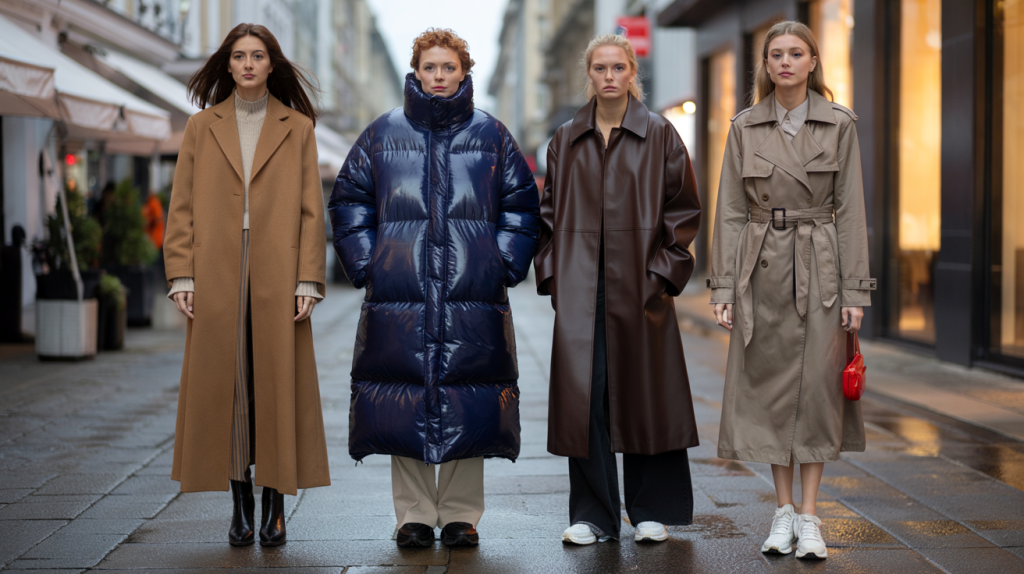
The coat sets the mood of every cold weather look. This season brings commanding long lines, deep textures, and a palette that swings from quiet camel to sharp cherry, all designed to lift everyday outfits the second the door opens.
Here is the point quickly. Big tailored silhouettes lead, leather and shearling add texture, puffers return with shine and volume, and trenches hold strong for mild spells. The aim stays simple: a coat that works hard from commute to weekend without losing that clean, confident shape.
Fall Winter coat trends, at a glance
Maxi length tailoring has dominated runways and streets, with straight shoulders and roomy cuts that let a knit or blazer slide underneath. Think a long wool coat that skims the ankle and cleans up sneakers as easily as heels.
Leather and faux leather coats add polish with minimal effort. The finish can be matte or high shine, but the cut stays simple so the texture does the talking. Even a basic tee looks intentional under it.
Puffers have shifted toward sleek quilting and lacquer like finishes. The look reads modern rather than outdoorsy, which opens the door to office use on frosty days. Shiny black, deep navy, or dark olive keep it sharp.
Trench and car coats keep their place for transitional weather. With warmer autumns landing more often, that lighter layer buys weeks of wear before real winter sets in.
Climate, fabric and why timing matters
Weather shapes smart choices. The Copernicus Climate Change Service reported in January 2024 that the year 2023 averaged 1.48 °C above the 1850 to 1900 level. Milder autumn, then short cold snaps, means many wardrobes benefit from one lighter coat and one true winter option rather than a single heavy piece.
Fabric choices follow function. Wool and cashmere blends deliver warmth, drape and longevity. For wet cities, a treated wool blend or bonded cotton resists drizzle without looking technical. For deeper cold, look at fill and construction, not just puff. Baffles that trap heat, high collars, storm plackets and knit cuffs change the day to day comfort.
Sustainability figures help decode labels. Polyester accounted for about 54 percent of global fiber production in 2022 according to the Textile Exchange 2023 report. Recycled polyester fills and shells now appear across mid price puffers, which lowers impact without a big price jump. Natural fibers still matter for longevity and repairability, so a wool blend over pure synthetics can extend the life of a dress coat.
How to pick the right coat, and avoid the usual mistakes
Start with lifestyle. If most days include public transport and a backpack, choose a structured wool coat with generous armholes and a back vent. For drivers, a mid length option that does not bunch at the seat saves the lining.
Fit makes or breaks it. Shoulders should sit flush, sleeves cover the wrist bone, and one thick knit should slide under without pulling at the buttons. Oversize can look great, but a slouchy shoulder that droops loses shape after a season.
Color strategy keeps outfits easy. Camel, navy and charcoal build a base that goes with denim, black and cream. If one statement piece calls your name, cherry red or dark chocolate lift neutrals fast and photograph beautifully.
Care plans count as much as the purchase. A good hanger, a quick brush, and a two dollar lint roller stretch the fresh look. Spot clean leather, air dry wool away from heat, and rotate pieces when the weather allows.
Here is the shortlist to reccomend when time is short and the budget must work hard.
- Maxi wool coat in camel or charcoal for work and evening
- Shiny or matte puffer with heat trapping collar for deep cold
- Trench or car coat for milder weeks and rain
- Leather or faux leather coat for instant polish on casual outfits
Prices, resale and the smart moment to buy
Resale has changed the math. The thredUP 2024 Resale Report projects the US secondhand apparel market to reach 73 billion dollars by 2028. That supports two strategies. First, buy quality with strong resale value like a classic wool coat, then move it on when tastes change. Second, source premium fabrics pre loved and redirect budget to tailoring and care.
Seasonality also helps. Retailers tend to mark down outerwear after the first true cold spell and again right after holidays. If the size runs common, waiting pays. If the fit is rare or the color is specific, securing it early beats hunting later.
One final check tightens the choice. Compare fabric weight in grams per square meter for wool, or fill power and fill weight for insulated coats. Look for sturdy buttons, lined pockets and clean stitching. Those small details, plus the right timing and a plan for care, close the loop and make the trend work day after day without fuss.