
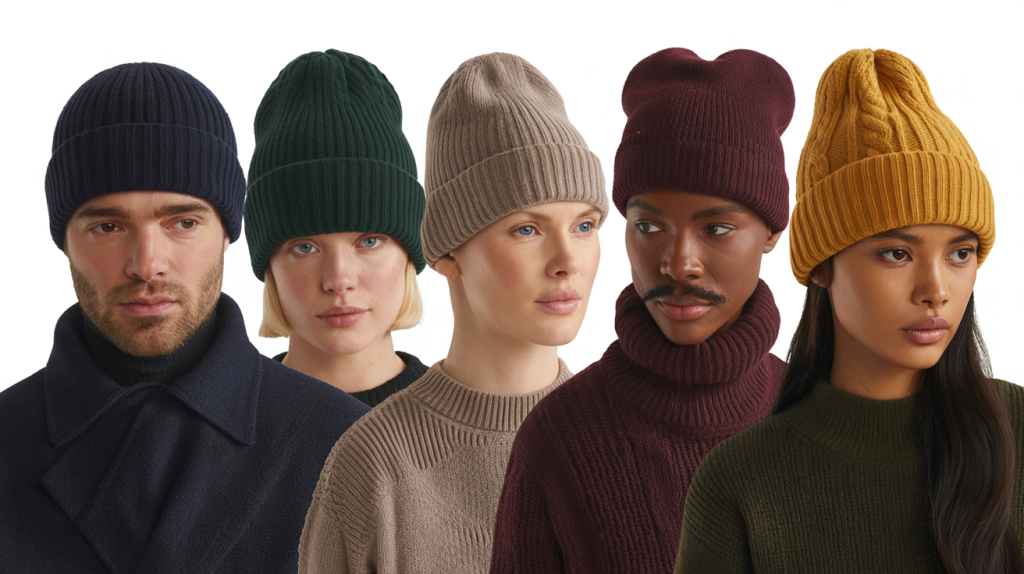
Winter hits, the beanie comes out, and the mirror can be brutal. Pick the right shape and your features look lifted and balanced. Pick the wrong one and cheeks seem wider, jaw looks sharper, or forehead steals the show. The good news : small changes in crown height, cuff and fabric instantly shift proportions.
Here is the straight answer people search for : round faces gain height with slouchy or high-cuff beanies, long faces look balanced with deep fisherman styles pulled lower, square faces soften with relaxed crowns and fine ribs, heart-shaped faces do best with low, wide cuffs that ground the forehead, and oval faces get the most freedom but shine with structured cuffs that frame the eyes. Keep reading for how to apply that in-store, at home and on cold city mornings.
Face shape rules that flatter: the right beanie, fast
Start with what the eye reads first: vertical height and where the knit breaks across the forehead. That line controls how long or wide the face appears in one glance.
- Oval face : almost any style works. Try a classic cuffed beanie with a medium cuff that sits just above the brows to frame the eyes.
- Round face : add vertical. Choose a slouchy beanie or a higher cuff that shows more forehead. Avoid tight skull caps that widen the face.
- Square face : soften angles. Pick a looser crown and finer rib knits. Skip very stiff cuffs or pointy crowns that echo a strong jaw.
- Heart-shaped face : balance the forehead. Go for a low, wide cuff and a close crown. Steer clear of tall, cone-like slouch.
- Long or oblong face : reduce vertical. Wear a fisherman beanie with a deeper cuff that covers the top of the ears. No extra height on top.
- Diamond face : widen at the temples. Choose a relaxed cuff and medium slouch that sits a touch back on the head.
Seen in the mirror: instant lift, less bulk at the wrong place, more balance where needed. That is the whole trick.
Real fit: head circumference, cuff depth and why size charts matter
Proportion means little if the beanie squeezes or slides. The CAESAR 3D Anthropometric Survey of civilian adults, conducted between 1998 and 2003, found average head circumference around 57.8 cm for men and 55.2 cm for women. That puts many shoppers in the so-called one-size range, but not everyone fits the same stretch.
Look at two specs in store descriptions. First : circumference range. Knits labeled one size typically stretch a few centimeters past their resting measurement. If your head is 59 to 60 cm, gravitate to models noted for extra stretch or tagged large. Second : cuff depth. A deeper cuff adds visual width and reduces height, great for long faces. A shallow cuff or uncuffed beanie adds height, better for round faces. Both details quietly decide whether a style accomodate your features or fights them.
Quick fit check that works in seconds. Place the cuff edge roughly one finger above the brows for balance, then slide up or down a half finger until the jawline looks either softer or sharper, depending on what you want to play down.
Fabric makes the look: merino, wool and acrylic under cold light
Comfort changes how a beanie sits after 20 blocks. Merino wool is the insider pick because the fiber can absorb up to around 30 percent of its dry weight in moisture vapor while still feeling dry, according to The Woolmark Company. That means less clammy forehead and fewer red marks, so the beanie stays where you placed it.
Classic wool adds structure and warmth, good for maintaining a flattering crown shape on square or heart-shaped faces. Acrylic brings easy care and consistent stretch, which helps with round faces that benefit from taller styles that hold their height. Blends often hit the sweet spot: a merino-acrylic rib keeps shape without itch and holds a cuff line in the exact spot that flatters.
Texture matters too. Fine ribs look sleek and soften angular features. Chunky cable knits add bulk, which can overwhelm smaller or oval faces but can balance a longer face on a big coat day.
Mistakes people make, plus the small fixes that change everything
Going too tall on a heart-shaped face is the classic mistake. That cone shape exaggerates the forehead. Switch to a low cuff and pull the crown flatter. Problem gone.
Wearing a tight skull cap on a round face compresses volume at the temples and widens the look. Swap for a soft slouch with a firm cuff edge set slightly higher, which adds vertical without chaos.
Another one: ignoring hair volume. Curly or coily hair adds height and width. Use a deeper cuff and stretchier rib so the silhouette stays balanced once the beanie is on, not just on the hanger.
One last check that stylists rely on. Look straight ahead, then tilt the beanie back a centimeter. If the nose-to-chin line suddenly looks longer, you found the sweet spot for round or diamond faces. If it looks too long, bring the cuff down a touch, which suits long or oval faces better.
For online orders, measure head circumference with a soft tape at the widest point above the ears, note centimeter numbers, and scan product pages for resting width and fabric blend. The data removes guesswork, and the mirror gives the final green light on height and cuff placement.